

Table of Contents ▾
Breast massage is the direct manual stimulation of the breasts using the hands or a gentle tool to move tissue, drain the lymph, and release physical tension from the chest wall. It targets three key areas, the breast mound, the underarm lymph nodes, and the fascia across the sternum.
For women, the breasts are hormonally active tissue. They are sensitive to stress, estrogen fluctuations, poor circulation, and even emotional repression.
Many women experience swelling, hardness, numbness, soreness, or lack of sensation in this area, but are never taught how to care for it.
Energetically, the breasts sit at the heart chakra, the center of compassion and feminine receptivity. When the chest is tight or shut down, a woman’s ability to feel sensual, and alive in her body is affected. Regular breast massage restores access to the heart center. This can lead to improved sensation and a deeper connection to erotic energy.
Benefits of Breast Massage
-
Early detection of changes in breast tissue
Regular massage makes you familiar with the texture, temperature, and density of your breasts. You begin to notice subtle changes before they become problems, and it can help you pick up breast cancer early.
-
Relief from engorgement and blocked ducts while breastfeeding
Gentle massage can help move milk through the ducts, relieving pressure and reducing the risk of mastitis. It eases the heavy, aching sensation of pain and breast tenderness that builds up in the chest and helps the milk flow more freely.
-
Lymphatic drainage after surgery, radiation, or illness
After medical procedures or illness, fluid often collects in the arms, armpits, and chest. Light, rhythmic breast massage helps drain this fluid by stimulating the lymph nodes, reducing that full, swollen feeling and improving tissue recovery, which can also lead to long term breast cancer prevention.
-
Improved circulation and tissue responsiveness
Massage stimulates blood flow. As circulation returns, the breasts may feel warmer, fuller, or slightly flushed. This increased blood flow brings nutrients to the tissue and helps restore sensitivity and natural tone.
-
Enhanced breast shape and tone
Over time, consistent massage can make the breasts appear more supple and lifted from increased circulation and cellular activity. The tissue feels more alive, less stagnant.
-
Release of tension in the chest and shoulders
Many women carry tightness across the sternum and into the shoulders. Breast massage helps release the deep fascia that pulls the body inward. It opens the front of the body and can reduce pain linked to forward posture or shallow breathing.
-
Regulation of hormonal and emotional tension
The breasts are hormone-sensitive tissue. Massage helps move excess estrogen and stress hormones through the lymph system. It can support more balanced cycles and reduce emotional pressure that tends to build up beneath the collarbones.
-
Access to deeper breath and heart rate regulation
Massaging the chest physically opens space around the lungs and heart. Many women report feeling their breath deepen and their nervous system calm within minutes of starting. This effect can last for hours.
-
Restored connection to sensuality and feminine presence
As the tissue softens and sensation returns, many women feel more tuned in to their sensuality. The body becomes more responsive & breast massage helps remove the emotional guards that disconnect women from their own erotic centers.
Step By Step Breast Massage Method
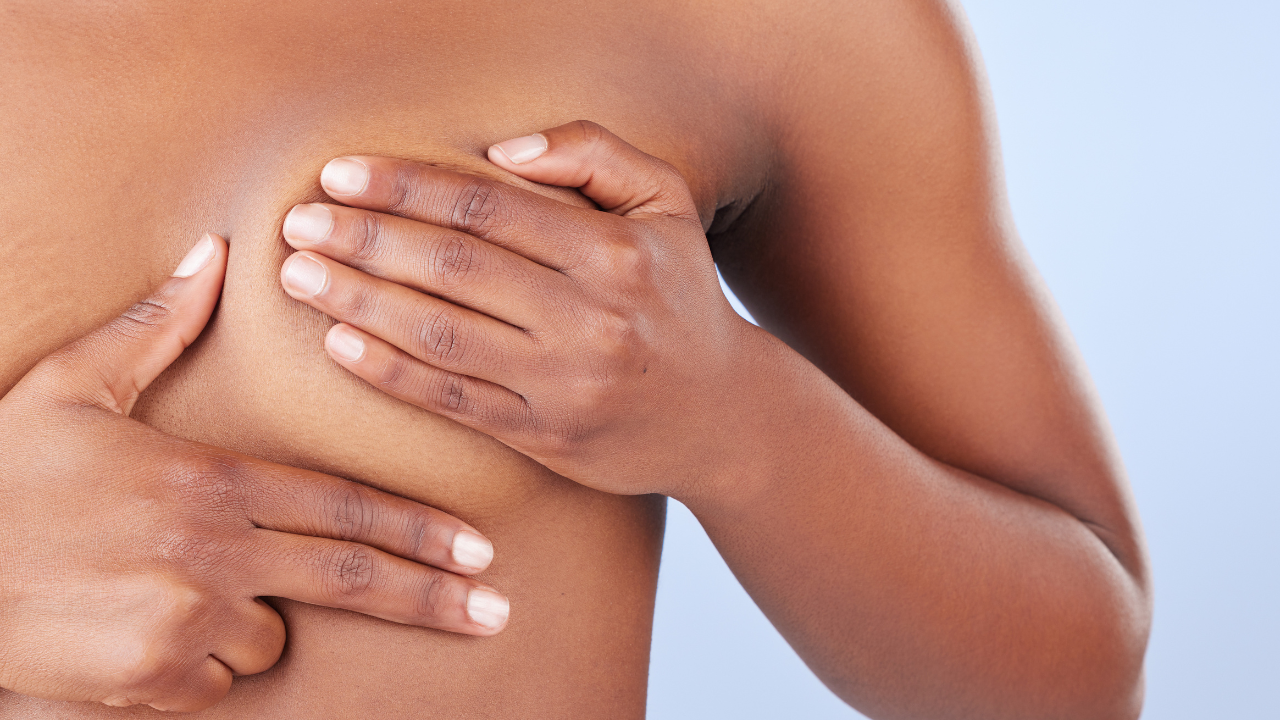
A 15-Minute Step-by-Step Practice
You’ll need clean hands, a body-safe oil (like coconut, almond, or formulated breast massage oil), and 15 minutes of privacy. This can be done seated, lying down, or standing in front of a mirror. Many women find this practice especially powerful when done before bed, after a shower, or during the luteal phase of the cycle, when the breasts tend to hold more fluid and emotional weight.
Step 1: Drop In and Warm the Tissue (1 minute)
Start by rubbing a few drops of oil between your palms until they feel warm. Without moving yet, place your hands over your bare breasts. Let them rest there. Close your eyes.
Feel the heat of your palms softening into the skin. This moment signals to your nervous system that you're here to connect. It also helps your body transition from being on guard to being receptive. Breathe deeply through your nose and exhale through your mouth, allowing your chest to gently expand with each inhale. Stay here for a full minute.
Step 2: Activate the Lymph System (2 minutes)
Using the pads of your fingers or the flat surface of your hands, begin feather-light sweeping motions from the center of your chest out toward your underarms, focusing on the armpit and outer edge of the breast. These strokes should barely press into the skin, think of moving fluid.
Start at the top of your chest, just under the collarbones, and work your way downward in slow, outward sweeps. This movement stimulates the superficial lymphatic vessels that clear excess fluid and waste, which is especially helpful if your breasts feel swollen or sensitive. You might feel a tingling or light warmth as circulation begins to move.
Step 3: Massage the Outer Breast Tissue (3 minutes)
Cup your breast with one hand and use the other to begin small, slow circles around the outer edges of the breast. Apply medium pressure, enough to feel into the tissue but not enough to cause discomfort. Move clockwise for a full rotation around the breast, then repeat in the opposite direction.
Focus on the top curve, the outer edge near the armpit, and the base where the breast meets the ribcage. This helps release tight fascia and increases circulation to areas that often go untouched. If you feel any hardened spots or tenderness, slow down and stay present with the sensation. This area is where emotional holding and stagnation often sit.
Step 4: Work Into the Center and Underneath (3 minutes)
Shift your focus to the center of the breast and the tissue underneath. Use the full palm to apply gentle but firm pressure in slow, spiraling motions around the nipple and the middle mass of the breast. You can also use your fingers to scoop and lift the tissue from the base upward, encouraging tone and elasticity.
Take your time. These inner areas are where many women begin to feel sensation return. If you’ve been breastfeeding or are in a high-hormone phase, you may notice fluid moving or a softening of pressure inside the breast.
Step 5: Release the Sternum and Chest Wall (2 minutes)
Now move your hands to the space between your breasts, over the sternum. Using your knuckles or fingertips, begin slow vertical strokes from the top of the sternum down to just above the stomach. Alternate with small circular motions along the bone and into the connective tissue beside it.
Many women carry tightness here from years of hunching or restrictive bras. Releasing this area can deepen your breath and reduce the feeling of emotional tightness in the chest. You may feel a subtle heat spread through your upper torso or notice your breath start to slow naturally.
Step 6: Massage the Armpit and Outer Chest (2 minutes)
Bring your attention to the outer edge of the chest and into the armpit crease. This is a key drainage area for the lymphatic system and often holds a puffy, dense quality when you’re inflamed or hormonally overloaded.
Use slow, firm pressure to massage in circular movements from the edge of the breast up into the underarm. If you feel tenderness or water-logged pressure here, that’s common. Work gently but with purpose.
Step 7: Integrate With Full-Breast Circular Sweeps (2 minutes)
To complete the massage, place one hand on each breast and begin to move them in wide, circular sweeps. Guide the tissue upward, inward, down, and outward in smooth, connected motions. These movements help bring everything together.
Many women find that this closing sequence brings a feeling of emotional integration. You may notice that your breasts look and feel more lifted because circulation has returned and holding patterns have released.
Close With Stillness and Breath
Rest your hands over your breasts one last time. Notice the temperature, texture, and responsiveness of your tissue. Take three slow, full breaths.
For a guided experience, we offer a guided audio for breast massasge in Module 4 of Viva La Vagina™ 2.0.
Touchpoints To Integrate With Self Massage
-
Choose a grounded, supported position: Sit upright with pillows behind your back or lie on your side with one arm crossing your body. This helps your shoulders relax and gives your hands stable access to the breast tissue. Eyes can be open or closed, let your breath guide your pace.
-
Start with full-palm warming strokes: Begin by placing the full surface of your hand over the breast and slowly stroking from top to bottom, outer edge to inner chest. This stimulates circulation and prepares the tissue for deeper work. Pause between strokes to let warmth build and blood flow rise.
-
Spiral from outer edge toward the nipple: Use slow, circular motions, starting at the outer edges and working inward. Spiral around the breast in clockwise motions first, then reverse. This pattern helps mobilize fascia and evenly stimulates the entire breast without overstimulating the nipple area too soon.
-
Incorporate lymphatic sweeps: Use feather-light strokes that move fluid out of the breast area and toward lymph exit points, the armpit and collarbone. The pressure should be barely more than the weight of your hand, like brushing leaves off the skin. These strokes support detoxification and reduce swelling.
-
Apply gentle lifting motions: Use your palm or fingertips to scoop from the base of the breast upward. This helps restore tone in the connective tissue and encourages natural lift over time by waking up circulation and nerve endings.
-
Pause often to check for changes: Notice how the tissue feels under your hand: any heat, tension, knots, or density. Slowing down allows you to track changes in texture and detect early signs of inflammation or hormonal buildup.
-
For nursing mothers: use rhythm and warmth: Begin with a warm compress to soften the breast. Then use rhythmic, steady compression starting from the outer breast and moving inward to support milk flow and relieve engorgement. Keep the pressure even.
-
For lymph drainage: always use the lightest touch
Keep your fingers soft and your stroke direction consistent, always outward and slightly downward, toward the underarm or collarbone. Lymphatic vessels sit just under the skin, so pressing harder won’t help; softness is more effective here. -
Let your breath guide your pace: Sync hand movements with the rhythm of your breath. If you notice yourself holding your breath or tightening your jaw, slow down. These are signs that your body is holding tension. Breathe into the movement to invite softness and release.
Are There Any Risks to Breast Massage?

If you’re in an acute infection phase, such as mastitis, an abscess, or inflamed cysts, massage should be avoided, especially if undergoing cancer treatment. During these times, the tissue is already under pressure. The ducts may be blocked, the lymph is slow, and there’s often heat, pain, or swelling. Pushing into this with massage can worsen inflammation or even spread infection. You may feel desperate to relieve the ache, especially while breastfeeding, but the best first step is to rest. Once the infection is resolving, gentle drainage massage may become helpful, but not in the active phase.
If you’ve had surgery, augmentation, reduction, mastectomy, reconstruction, fat grafting, massage is not off-limits, but it’s not the same. The presence of scar tissue, nerve damage, or implants changes the entire landscape of touch. You might have areas that are numb, overly sensitive, or structurally shifted. Jumping into deep or standard breast massage here can disrupt healing or cause discomfort that lingers. In many situations, modified breast and chest massage can actually improve post-surgical outcomes, but it has to be done at the right stage, with the right guidance.
If something doesn’t feel right during the massage, like experiencing burning, stinging, sharp pain, nausea, or a flood of unexpected emotion, stop. They signal that your body is trying to process faster than it safely can. Come back to a neutral touch like holding your hands over your chest or shifting to the upper arms. You can always return later when your system feels more stable.
Crystal Wands for Your Breast Massage
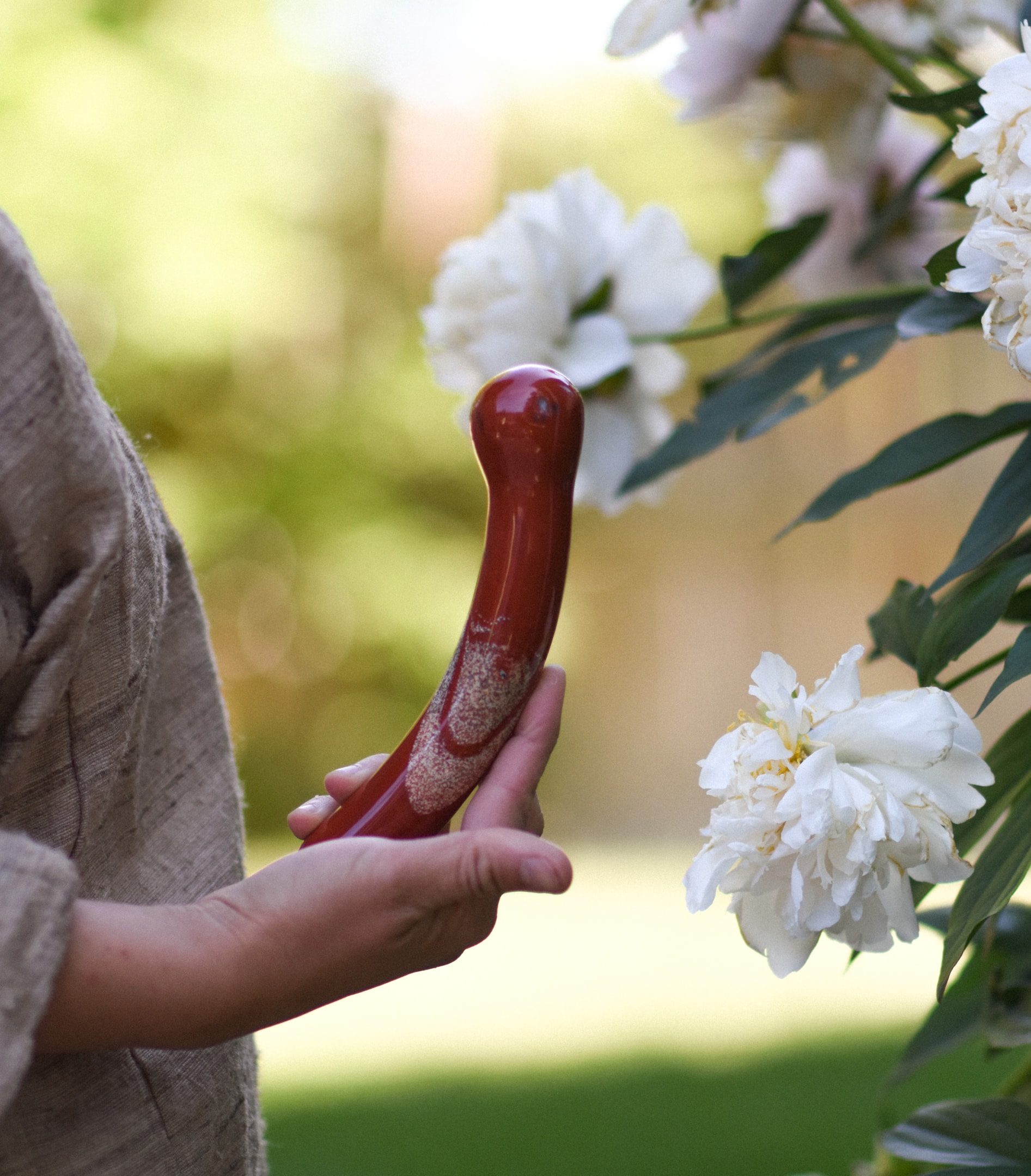
I have a Red Jasper Amrita® Wand, and to be frank, I actually use it more for body massage than for self-pleasure. Its shape and weight make it perfect for working into the chest wall, sternum, and fascia under the breasts. I have found that crystal wands makes manual massage more effective.
Massage wands work because they provide leverage, precision, and consistent pressure. Unlike your hands, which fatigue or shift under pressure, a wand holds steady. The solid material distributes pressure evenly, allowing you to apply deeper strokes without straining your wrists or fingers.
The weight of the wand does most of the work for you. Instead of pressing down with effort, you can glide or lean the tool into the tissue, letting gravity and momentum support the release. This reduces muscle fatigue and lets you stay focused on sensation.
I have also found that crystal wands have a perfect smooth surface that allows for clean movement across the skin when paired with oil. This makes it ideal for long lymphatic drainage strokes, from the breastbone out toward the armpit, or for cross-fiber work beneath the collarbone. The firmness also makes small, circular movements more effective.
Only use wands with safe shapes, like flat gua sha-style tools or rounded, bulbous-ended wands with no sharp angles.
Conclusion
For a long time, breast massage wasn’t part of my self-care routine. I focused on my face, my skin, my workouts, my womb even, but my breasts were an afterthought. I only really paid attention when they were sore, swollen, or uncomfortable before my period. I didn’t realize how much stagnation and emotional weight I was carrying in my chest, until I started making constant conscious contact.
When I began practicing breast massage regularly, two to three times a week, my breasts felt less tender, and the heart to breast connection help me soften into my cycles of feminity and sensuality more readily and willingly. In essence, breast massage is a way for me to break down the walls I have build around my heart over time.
Some days, the practice is slow and deeply emotional. Other days, it’s five minutes of tension release while lying in bed. But each time I show up, I reconnect. I come back into myself.
If breast massage is new for you, start with one session this week. Let it be simple, let your hands explore with curiosity. It’s truly worth it, every time.
