
Table of Contents ▾
Yoni Puja is an ancient Tantric ritual devoted to honoring the yoni, the vagina, the womb, the living portal of life. It is the origin of every human being, the place where spirit first meets flesh. To honor the yoni is to bow to this truth that all creation begins in the body of a woman.
Yoni Worship, in its modern form, is the practice of meeting the yoni, your own or a partner’s, with love and deep respect. In this article, we’ll explore how Yoni Puja and Yoni Worship differ and how they weave together.
Yoni Puja / Yoni Worship Meaning
What is Yoni Puja?
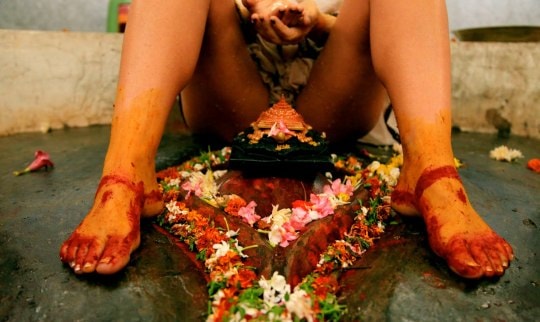
Image Source: Arjuna Vallabha (Tumblr)
Yoni Puja is one of the oldest known rituals of feminine worship. The sanskrit word yoni means “womb,” “source,” or “sacred passage.” It is a sacred ceremony that honors the yoni, the vulva, as the source of life. Within the Tantric and Hindu traditions, the yoni is understood as the seat of Shakti, the creative, pulsating force that gives rise to the entire universe.
To practice Yoni Puja is to remember that divinity lives in the body and that the same power that spins galaxies also births and loves through the body of woman. In its most traditional form, the ritual takes place as ceremony. A yoni, represented through a carved stone or through the living body of a woman, is worshipped as the goddess herself. Flowers are laid, mantras are chanted, and offerings such as milk, honey, oils, and rosewater are poured over her.
The devotee meets the feminine with awe, acknowledging her as the living source of creation. In temples such as Kamakhya in Assam, a natural rock formation is worshipped as the yoni of the goddess. Once a year, during the Ambubachi festival, the temple closes to honor the goddess’s menstrual cycle. The earth is said to “bleed,” and when the temple reopens, pilgrims gather to receive the sacred waters that have flowed from her womb. In these ancient gestures, the feminine body and her cycles are seen as holy.
Beyond the outer ceremony lies the inner Puja, a more meditative form of worship. In this inner practice, the yoni is visualized as a radiant center of light and creation during meditation. Practitioners may meditate on the energy within their own womb space feeling the pulse of Shakti alive inside. It’s a return to the truth that the creative force of the divine is not out there, but within.
Yoni Puja vs. Yoni Worship

Yoni Worship is the modern-day expression of Yoni Puja. In classical Tantra, Yoni Puja is a literal ritual of worship and a spiritual practice, a recognition that the divine mother lives within the feminine form.
In contrast, Yoni Worship is a modern, embodied practice that focuses on reconnecting with the physical yoni and its energy. Instead of ritual offerings to a temple deity, modern women turn inward, treating their own bodies as sacred temples.
This practice is rooted in building a conscious relationship with your own yoni through awareness and touch. The intention is to restore sensitivity and awaken the creative and sensual energy that lives in the pelvic space. Modern women use tools such as yoni mapping, womb breathing, de-armoring massage, crystal pleasure wands, and yoni eggs to perform yoni worship.
Yoni Worship can also be practiced with a partner. In partnered worship, the lover approaches the yoni as sacred, offering touch, massage, and oral adoration as acts of devotion. The purpose is to to honor and to awaken her Shakti energy.
Outer Yoni Puja: Ritual Elements and Steps
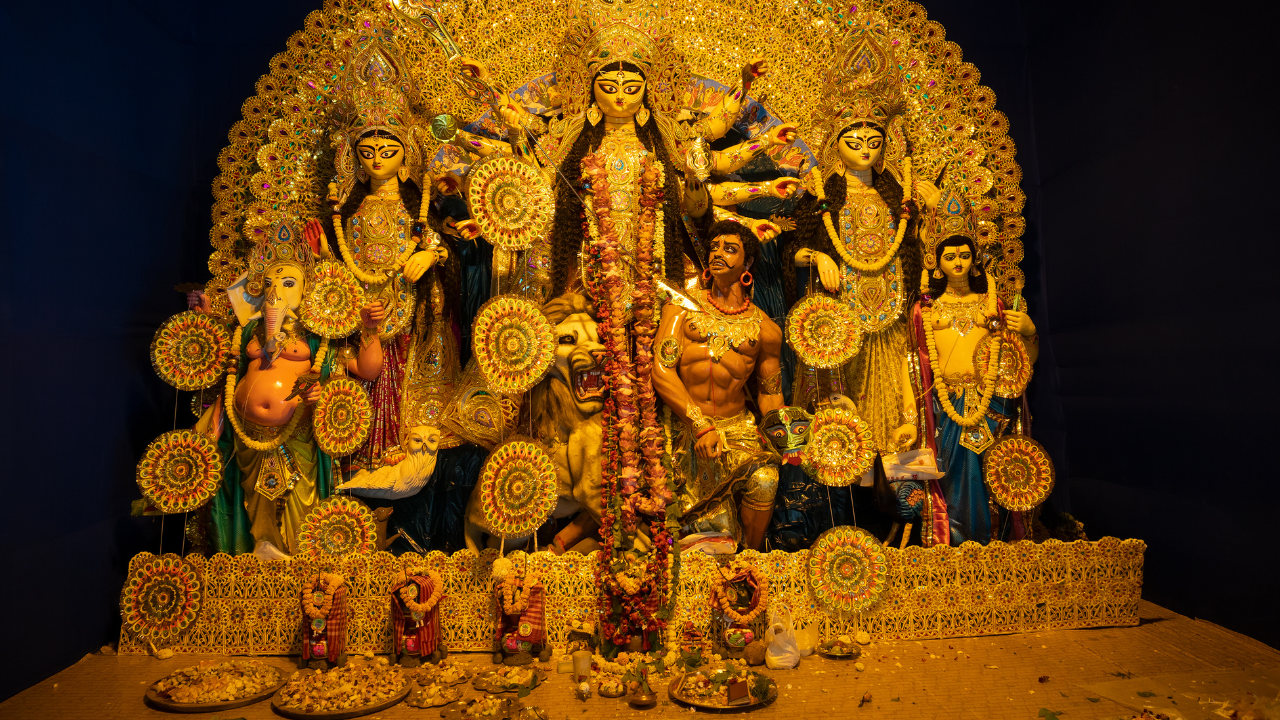
In this section, we’ll walk step-by-step through how a Yoni Puja ritual is traditionally performed.
1. Create a Sacred Setting
Choose a clean, quiet space. Lay a cloth on the floor or altar and place simple items that represent the feminine, like flowers, a small bowl of water, rice or fruit, a candle or oil lamp. If a symbolic yoni-lingam or a carved stone is used, place it at the center.
2. Salutation and Reverence
The ritual always begins by acknowledging Shakti, the creative feminine energy. Participants (or you, if practicing alone) bring the palms together and bow, saying a short invocation such as “Om Shakti Om.”
This opening moment reminds everyone that the yoni is being approached as sacred.
3. Offerings to the Goddess
Next, five traditional offerings are placed before the yoni, which is fruit, flower petals, rice, ghee, and incense.
Each stands for nourishment, beauty, abundance, light, and transformation. The key principle is to give before receiving. In ancient temples, these offerings were set at the feet of a goddess statue or before the yoni-lingam.
4. Adoration and Chanting
With the offerings complete, devotion is expressed through sound. You might chant “Om Shakti Om” or “Jai Ma” (“Victory to the Mother”).
Fill the space with gratitude and vibration. This stage celebrates the feminine as the source of life and creative power.
5. Sanctifying the Five Elements
The most symbolic part of Yoni Puja is the bathing of the yoni with five sacred liquids that represent the elements of creation:
|
Element |
Substance |
Meaning |
|---|---|---|
|
Earth |
Yogurt |
nourishment and steadiness |
|
Water |
Water |
cleansing and flow |
|
Fire |
Honey |
warmth and transformation |
|
Air |
Milk |
purity and breath |
|
Ether |
Oil |
space, connection, unity |
Each liquid is poured slowly over the yoni symbol or poured into a single bowl while the element’s name and meaning are spoken aloud. This act unites the natural elements with the feminine source of life.
The mixture that gathers is called prasad, the blessed essence of the ritual.
6. Invocation and Blessings
After the libations, participants offer prayers or intentions. You can ask for healing, guidance, creativity, or strength, anything that comes from the heart. This part of the ritual is viewed as direct conversation with the divine feminine, treating the yoni as an oracle.
7. Meditation and Closing
To complete the puja, everyone sits in silence. Eyes close and awareness settles in the lower belly, the energetic womb. This quiet time allows the energy of the ritual to integrate.
After several minutes, the space is closed with a final bow or chant of thanks to Shakti. Participants may sip a little of the prasad or simply share it symbolically to receive the blessing.
Inner Yoni Puja: Visualization Practice

Inner yoni puja entails honoring the yoni through meditation, and instead of creating a offering ritual, you send love and devotion energetically to honor the feminine power of the universe.
1 . Preparation
Find a quiet space where you can sit or lie down comfortably. Silence your phone, dim the lights, and let the room feel safe. Close your eyes and bring awareness to your breath.
-
If you have a womb: breathe gently into the lower belly and pelvis, feeling each inhale descend and each exhale soften the tissues around the hips.
-
If you do not have a womb or identify differently: visualize one made of light in the center of your pelvis, a luminous bowl or glowing lotus that represents the creative feminine principle.
With each inhale, let energy drop from the head into this inner center; with each exhale, allow the body to open and relax. Sense this place as warm and alive.
2. Visualization
Begin to imagine the yoni as a radiant lotus resting at the base of your pelvis. Its petals unfold with each breath, glowing in colors that feel natural to you, like rose, gold, crimson, or pure white. See this lotus as part of you that is human and the aspect that belongs to the greater universe.
Now picture gentle offerings like light, honey, milk, or rosewater, being poured into this lotus. As you visualize, sense gratitude rising from your heart toward this creative center.
3. Mantra or Affirmation
When the feeling of energy becomes tangible, begin to sound. You may use the traditional mantra Om Aim Hreem Kleem Chamundaye Vichche to invoke Shakti, the power of transformation, or choose simple phrases such as:
-
I honor the source of life.
-
I am both creation and creator.
-
My body is a sacred space.
Let the sound vibrate in your pelvic bowl and spread upward through the torso. If you prefer silence, repeat the words inwardly with the rhythm of your breath.
4. Absorption
Gradually let the mantra fade. Sit quietly, resting attention in the warmth of the pelvis or the imagined womb of light. Allow sensations to unfold or experience simple stillness. Many practitioners describe this stage as resting in the embrace of the Divine Mother, the awareness that nurtures all beings.
Stay for several minutes or as long as it feels nourishing. When you sense completion, take a few deeper breaths. Bring one hand to the heart and one to the lower belly (or to the place you visualized the womb) and acknowledge the energy you’ve awakened.
Open your eyes slowly. Sit for a moment in gratitude before returning to ordinary activity.
Ways To Perform Yoni Worship

Yoni Worship is the practice of consciously honoring the yoni through direct practises with the yoni.
-
Mirror Work: Looking at your vulva in a mirror is one of the most direct acts of Yoni Worship. Most women grow up disconnected from how their genitals actually look. Taking time to look without judgment or comparison is a way to learn to truly love and honor this space with no shame.
-
Naked Presence: Spending time naked in private is another form of worship. It strips away the constant pressure to appear a certain way and lets you experience your body as it is.
-
Conscious Self-Pleasure: Self-pleasure becomes Yoni Worship when it’s done with presence instead of having a goal like cimax. Instead of chasing an orgasm, you focus on feeling and staying connected to your body. When you approach pleasure this way, it becomes a way to honor the energy that gives you life.
-
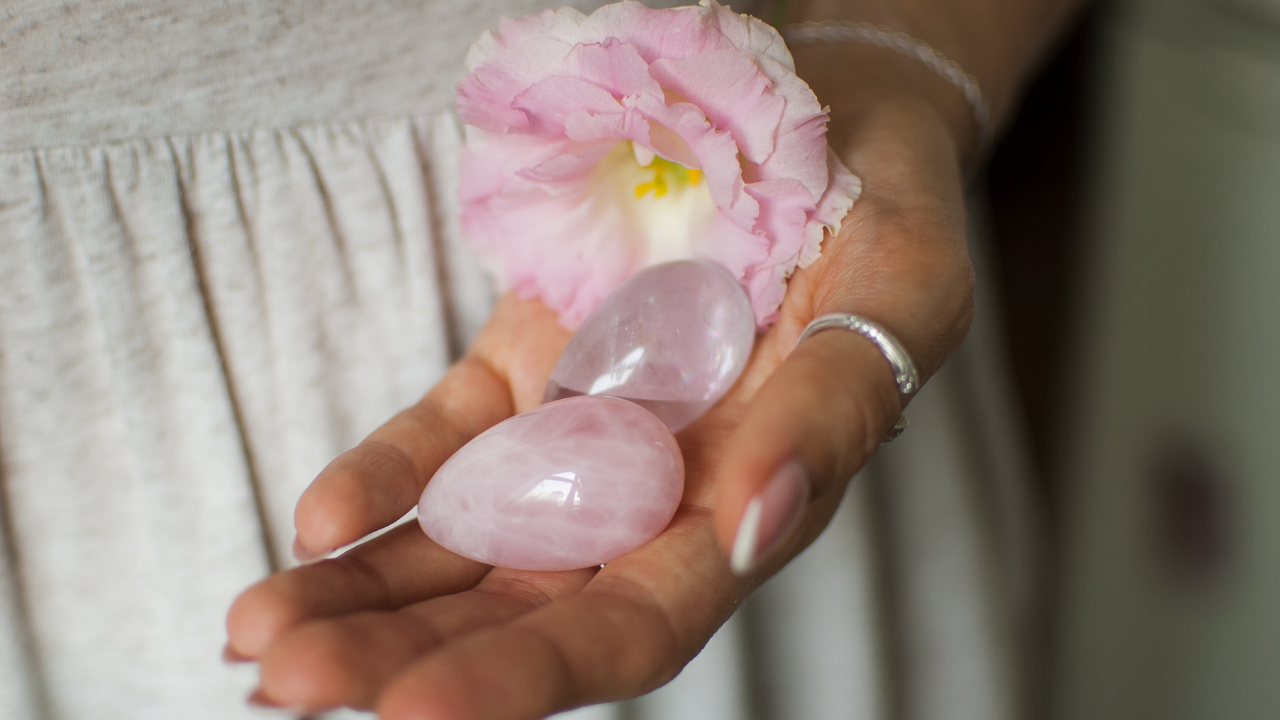
Yoni Eggs: Yoni eggs are smooth, polished crystals shaped like small eggs that are gently inserted into the vagina. In Yoni Worship, their purpose is to build awareness and connection. The weight and presence of the egg help you bring attention to your pelvic space, and by simply noticing how your body responds you begin to listen to the wisdom stored in this area.
-
Art of the Yoni: Creating or buying art inspired by the yoni is another modern form of worship. It transforms the yoni from something hidden into something celebrated.
-
Yoni Ritual Baths or Steams: Yoni steaming, or vaginal steaming, is the practice of sitting over a bowl of warm, herbal-infused steam that gently rises to cleanse and nourish the pelvic area. It has roots in many traditional healing systems, from African to Korean to Central American lineages.
FAQ
Yoni worship is the sacred act of honoring the feminine as the source of life, creation, and divine energy. The word yoni, from the Sanskrit language, literally means “womb,” “source,” or “sacred passage.” It refers to the female genitalia, the vulva, yet in Yoni Tantra, it is the symbol of the feminine force that gives birth to the entire universe.
In the tradition of Tantra, yoni worship represents reverence for Shakti, the goddess, the divine mother, and the creative power of mother earth herself. When a devotee worships the yoni, they are acknowledging the sacred feminine energy that animates all of life. It’s an act of devotion that reunites the feminine and masculine energies, Shakti and Shiva, as one.
In modern practice, yoni worship helps women reconnect with their sexuality, pleasure, and truth, transforming the way they relate to their own bodies. The practice invites deep connection between lovers, between body and spirit, and between the human and the spirit world.
A yoni ritual, often referred to as yoni puja, is a Tantric ceremony of reverence and adoration for the feminine. Originating in India, these rituals are acts of worship that celebrate the sacredness of the womb, vagina, and creative power of woman. In traditional temples, devotees would gather to offer flowers, milk, ghee, and mantras to the yoni lingam, which is the symbolic union of feminine and masculine energies.
During yoni puja, participants may chant prayers to Shakti, Parvati, Durga, or Kali, forms of the divine mother. The offerings made in the ritual, often placed near the fire pit or lotus symbol, are expressions of gratitude for life itself.
At its core, a yoni ritual is an invitation to step beyond worldly ideas of shame and into the original spirituality that recognizes the yoni as the living form of creation.
Yoni Puja is performed both as an outer ritual and as an inner meditation. Traditionally, it begins with prayers and invocations to Shakti and Shiva. The space which is often a temple, home altar, or sacred site is prepared with offerings such as fruit, rice, flowers, ghee, milk, and incense.
In certain temples, most famously at the Kamakhya Temple in Assam, the yoni of the goddess is worshipped in a living form: a natural stone cleft said to represent her womb. Each year, the temple closes for several days to honor the menstruation of the goddess, and when it reopens, devotees receive water blessed by her creative force.
In the inner form of yoni puja, practitioners meditate on the yoni chakra — the energetic center in the pelvis, visualizing it as a luminous lotus, pulsing with divine energy. They breathe into the womb, feeling its connection to mother earth and the universe, merging their awareness with Shakti’s presence.
The yoni symbolizes the creative force of the divine, the portal of birth, transformation, and divine energy. It is both literal and abstract representation of the female reproductive organs and the spiritual principle of creation. In Tantra, the yoni is understood as the seat of Shakti, the feminine energy that moves through all forms of life.
It represents mother earth, the womb of the universe, and the sacred space through which consciousness takes form. When paired with the lingam, the symbol of Shiva, the masculine energy, the two together embody the eternal dance of creation and dissolution.
In sacred art and temples across India, the yoni is depicted as a lotus or circular fire pit, signifying both the beauty and the transformative power of the feminine. Figures like Lajja Gauri, the ancient goddess of fertility, are shown with open wombs and lotus flowers which are visual prayers to the sacredness of the woman’s body.
Ultimately, the yoni symbolizes the truth that life, in all its pleasure and erotic vitality, is sacred. To honor the yoni is to honor the goddess, Shakti, and the creative power that moves through everything.
