
Table of Contents ▾
Pelvic floor health is finally getting attention among men. We read a Bloomberg article that revealed how men are now paying up to $320 per session for pelvic floor physical therapy to relieve pain, urinary problems, and sexual dysfunction that no medical test can explain.
One young investment banker described severe groin pain that worsened with stress. His prostate and bloodwork looked normal, and the real cause was a pelvic floor locked in chronic spasm, cutting off circulation and nerve flow.
Many men silently deal with pelvic pain unaware that the issue often lies in overactive, or underactive pelvic floor muscles.
While clinical pelvic floor massage is highly effective, men can also learn to care for this area themselves. With simple external and internal release techniques, or the use of a wand, it’s possible to ease pain without spending hundreds per session.
Understanding the Male Pelvic Floor
The male pelvic floor is a complex network of muscles, connective tissue, and nerves that form the base of the body that supports nearly every essential function below the waist. These muscles create a muscular sling stretching from the pubic bone to the tailbone.
This sling supports the pelvic organs, including the bladder, rectum, and prostate while maintaining control over urination, bowel movements, and sexual function. When these muscles contract, they help prevent leaks and stabilize the core; when they relax, they allow elimination and release. They also play a role in erectile health.
Everyday life constantly engages these muscles. They tighten slightly when you lift something heavy, hold your breath, or brace your abdomen. They also respond reflexively to emotional stress. Over time, certain habits can cause the pelvic floor to remain partially contracted.
What is Male Pelvic Floor Massage?
Male pelvic floor massage is a manual or tool-assisted therapy that focuses on releasing chronic tension in the deep muscles of the pelvis.
When the pelvic floor stays tight or uncoordinated, a state known as pelvic floor dysfunction, the muscles lose their ability to relax fully. This creates trapped pressure, nerve compression, and restricted circulation throughout the pelvic basin. Pelvic floor massage works to soften the hypertonic muscle fibers and restor elasticity and neuromuscular balance.
There are two main forms of pelvic floor massage: external and internal.
-
External pelvic floor massage targets the surface structures that support and influence the deeper layers and include areas like the perineum, lower abdomen, inner thighs (adductors), and glutes.
-
Internal pelvic floor massage, on the other hand, reaches the true core of the dysfunction. For men, this means accessing the pelvic muscles through the rectum, where the deeper fibers including those surrounding the prostate can be contacted directly.
Why Men Need Pelvic Floor Physical Therapy
Urinary Incontinence
Men can experience several types of urinary leakage, including urge incontinence (sudden strong need to urinate), stress incontinence (leakage during coughing, sneezing, or lifting), and post-prostatectomy leakage following surgery.
In each case, the problem often lies in pelvic floor muscle dysfunction, either weakness that prevents proper closure of the urethra or excessive tension that disrupts bladder coordination. A tight pelvic floor can paradoxically make urination harder to control because the muscles no longer respond smoothly to signals from the nervous system.
Massage helps restore control and improve the rhythm between contraction and release, allowing the bladder to function more efficiently.
Erectile Dysfunction
Most men think of erections as purely vascular, a matter of blood flow and hormones, but few realize how deeply pelvic floor health drives sexual performance. Beneath the surface, a network of muscles at the base of the penis acts like a natural pump. These muscles trap blood inside the erectile chambers and sustain firmness during arousal.
When these muscles are weak, they fail to maintain internal pressure, leading to partial or short-lived erections. When they’re too tight, the opposite problem occurs where constant contraction compresses the very blood vessels and nerves needed for healthy arousal. Over time, that overactivity desensitizes the pudendal nerve, dulling sensation and making pleasure feel muted or mechanical.
By softening the muscles around the perineum and releasing tension near the prostate and tailbone, pelvic massage ensures blood can move freely again.
Post-Surgical Recovery
After any pelvic or abdominal surgery the body’s natural defense mechanism is to tighten and guard. The surrounding pelvic floor muscles contract instinctively to protect the surgical site. This short-term protection, however, can evolve into long-term muscle guarding and chronic discomfort if not addressed.
Scar tissue itself is part of healing, but it behaves differently from healthy fascia. It’s less elastic and more adhesive, meaning it sticks to nearby structures. In the pelvis, where dozens of small muscles, blood vessels, and nerves converge, even a few millimeters of restriction can disrupt nerve signaling and tissue mobility. The result can be lingering pelvic pain or a pulling sensation deep in the lower abdomen.
Through myofascial release and internal massage, you can train the fascia and muscles to glide freely again.
Bowel Control
For many men, constipation or the feeling of not being able to “let go” during a bowel movement is a pelvic floor dysfunction problem. The pelvic floor muscles, form a sling around the rectum that must relax fully for stool to pass. When these muscles remain tense, they pull the rectum into a kinked position, forcing the body to strain against its own resistance.
Over time, this creates a loop of frustration where the more a man pushes, the more the pelvic muscles tighten in response, reinforcing the very problem he’s trying to solve. Through manual release the muscles learn to yield, and as flexibility and tissue glide return, the body can use pressure efficiently instead of forcefully.
Chronic Pelvic Pain
Chronic Pelvic Pain Syndrome (CPPS) is one of the most misunderstood and misdiagnosed male conditions. Many men are told it’s prostatitis or a bladder issue, but the real cause often lies in the overactive pelvic floor muscles and the fascia surrounding the prostate, perineum, and lower abdomen. These deep muscles can develop micro-spasms or “locked” patterns that trap nerves and send pain signals throughout the pelvic region.
The pain is rarely localized, it can radiate into the groin, testicles, tailbone, or inner thighs, shifting day to day. Some men describe it as a dull ache, others as a sharp internal pressure or burning sensation after sex, sitting, or stress. What’s really happening is a feedback loop between the nervous system and the pelvic floor where stress increases muscle tone and tight muscles compress nerves which results in discomfort that keeps the body in a state of vigilance.
By gently releasing trigger points and decompressing the pudendal nerve, the nervous system can relax, and as the nervous system recalibrates, blood flow returns and the body learns that it’s safe to relax again.
Male Pelvic Health Treatments
Myofascial Release
Myofascial release is a hands-on technique that targets the fascia; the thin, elastic web of connective tissue that surrounds every muscle, nerve, and organ in the body. In the pelvis, this fascial network connects the pelvic floor to the hips, abdomen, sacrum, and diaphragm. When healthy, the fascia moves and glides freely. But when it becomes tight, it restricts movement and keeps the pelvic floor muscles locked in tension.
The restriction acts like a net that has lost its elasticity, limiting circulation and preventing the pelvic muscles from expanding and contracting normally.
During myofascial release therapy, slow, sustained pressure is applied with hands or fingers along the affected areas. Rather than pushing hard, gentle pressure is held until the fascia begins to “melt” and lengthen on its own. For male pelvic issues, this may involve working through the inner thighs, lower abdomen, perineum, or, in some cases, internally through the rectum to reach the deeper pelvic sling and surrounding connective tissue.
Trigger Point Therapy
A trigger point is a small, tightly contracted bundle of muscle fibers, essentially a micro-spasm that forms when the body’s stress or tension response becomes chronic. These points restrict circulation and send pain signals to other areas of the pelvis.
In the male pelvic floor, trigger points commonly develop within the levator ani group. Because this region is densely packed with sensory nerves, even a few overactive fibers can cause symptoms that feel far away from the true source, radiating into the penis, scrotum, perineum, or tailbone.
During trigger point release therapy, gentle, sustained pressure is used to locate and deactivate these nodules. By maintaining steady pressure on the affected area for 60–90 seconds, the therapist allows the nervous system to recognize the contraction and “let go” of the reflex that’s keeping the muscle locked.
For men, internal trigger point therapy may target specific muscles:
-
The puborectalis, which often causes a deep, trapped sensation or difficulty emptying the bowels.
-
The obturator internus, a deep hip rotator that can refer pain into the testicles, perineum, or sitting bones.
External Massage
External pelvic floor massage is the most accessible starting point for men exploring pelvic release work. The pelvic floor is part of a wider network involving the glutes, adductors, hip rotators, and lower abdominal wall. These surrounding muscles constantly influence the alignment and tone of the pelvic sling. When they become tight or imbalanced, they pull on the pelvic floor, trapping it in a cycle of overactivation.
Working through these external areas helps to release that chain of tension and restore balance throughout the pelvic girdle. Gentle perineal massage, applied to the soft tissue between the scrotum and anus, increases blood flow to the pelvic outlet and desensitizes the chronic guarding patterns that often form there. Releasing the gluteal and deep hip muscles frees the sacrum and enhances the natural mobility of the pelvis, while focused work on the inner thighs and adductors reduces fascial tension along the sides of the pelvic floor. Equally important, slow lower abdominal release helps decompress the front of the pelvis, easing the pressure that builds from years of shallow breathing, stress, or excessive core bracing.
Wand Work
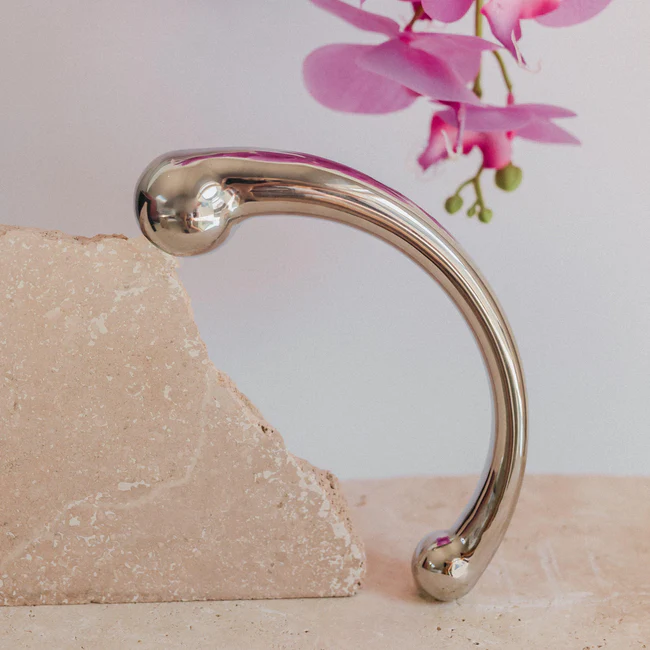
Pelvic massage wands, made from medical-grade materials or natural crystals, are tools specifically designed to help release deep muscular tension and improve mobility in the pelvic floor, especially in areas that are difficult or impossible to reach with fingers alone. For men, these deeper muscles sit just inside the rectum, wrapping around the prostate and attaching to the pubic bone, tailbone, and pelvic walls.
Wands with a curved shape follows the natural contour of the pelvis, making it easier to locate trigger points. When used consciously, the wand can perform the same type of trigger point therapy or myofascial release a trained therapist would do manually.
Internally, the wand is inserted with lubrication and guided with the breath. The goal is gentle contact and sustained pressure at points of resistance. Holding steady pressure for 60–90 seconds allows the muscle fibers to lengthen, the fascia to release, and the nervous system to register that it’s safe to relax. Small, slow sweeping motions can also be used to follow the tension lines through the pelvic sling, releasing restriction and improving blood flow around the prostate and perineum.
Wands can also be used to massage the perineum (the soft, sensitive area between the scrotum and anus) as well as along the inner thighs, adductors, and lower abdomen. Externally applied, the wand helps break up fascial tightness and release the superficial muscle layers that influence deeper pelvic tone. This approach is particularly effective for men who are new to pelvic work or who prefer to start gently before exploring internal release.
FAQ
A male pelvic floor massage is a form of manual therapy or pelvic floor physical therapy that targets the deep pelvic floor muscles responsible for bladder control, bowel movements, and sexual function. For men, this includes muscles that wrap around the bladder, rectum, and prostate, areas that often develop tightness or trigger points due to stress, sitting, or chronic tension. When done consistently, whether by a pelvic floor physical therapist or through self pelvic floor massage, massage helps reduce pain and retrain the male pelvic floor to relax and contract naturally.
In some cases, yes, but it’s always consent-based, and done only when necessary. During pelvic floor therapy, a trained physical therapist may use a gloved, lubricated finger to perform internal massage through the rectum. This allows them to access the deep male pelvic floor muscles that attach to the tailbone, pubic bone, and pelvic sidewalls, areas impossible to reach externally. For men uncomfortable with internal work, external pelvic floor massages and treatment techniques like myofascial release, trigger point therapy, or electrical stimulation can also improve symptoms and restore pelvic floor function.
Ejaculation involves rhythmic contractions of the pelvic floor muscles, particularly the bulbocavernosus and ischiocavernosus, the same muscles that help maintain erection and control urine flow. In that sense, it’s a natural form of pelvic floor activity, but not structured enough to be true pelvic floor training.
Regular ejaculation won’t necessarily improve pelvic floor strength or correct pelvic floor dysfunction. In fact, if the muscles are already tense, frequent ejaculation without recovery may reinforce muscle guarding or tension in the pelvic region. Structured pelvic floor exercises, self pelvic floor massage, and relaxation techniques like diaphragmatic breathing are far more effective for long-term pelvic health. These practices develop both strength and flexibility, allowing the pelvic muscles to contract with power and release fully afterward, which is the key to balanced sexual performance and overall pelvic floor function.
Conclusion
Most men have no idea how much tension they carry in their pelvic floor or how directly it affects their comfort. While pelvic floor therapy is becoming more common, it’s still mostly discussed in the context of women’s health. The truth is that men need this work just as much.
Pelvic floor massage gives men a way to address the problem at its root. For many, it’s the missing link in resolving pelvic pain or problems that standard medical care can’t explain.
While most of our wands are designed with women in mind, the same tools can be incredibly effective for men. A high-quality wand allows for both external and internal pelvic floor release.
For men ready to explore this work, the Venus Wand® is the one I recommend. Its solid stainless steel body, curved design, and dual spherical ends make it ideal for pelvic floor massage, prostate care, and perineal release. It’s heavy enough to provide steady pressure without strain, completely body-safe, and easy to control.
Once men start working with their pelvic floor they often realize just how much they’ve been holding onto. A few minutes of mindful release with a massage can change the way the body feels entirely.
