
Table of Contents ▾
The Dark Feminine is what society often frames as “masculine traits” in a woman, traits that are rewarded in men, yet questioned & criticized when women express them. Dark feminine energy is about dominance, assertiveness, and a sultry presence that owns its effect. It’s the ability to set a boundary and hold it and to make choices based on desire rather than permission.
So why are these qualities called “dark” when a woman embodies them? Why does the label only appear when we step outside the expected image of the ever-loving, endlessly compassionate, self-sacrificing nurturer?
The Dark Feminine is the shadow side of the divine feminine, a place where our subconscious thoughts live alongside our unfiltered emotional impulses and primal instincts. And yet, the narrative that this shadow is somehow bad or dangerous has always felt flawed to me, because it implies that to be a “whole” woman, we must fracture ourselves, only showing the parts deemed acceptable, while hiding the rest.
Through my own spiritual path, I’ve learned that the truth is far less tidy. We are contradictions. We can carry deep love and fierce boundaries in the same breath. We can be nurturing and unapologetically self-serving. We can hold light and shadow together, and in doing so, we come closer to our most authentic essence as women.
What is Dark Feminine Energy?
Dark Feminine energy is the expression of a woman’s power that refuses to be softened or contained for the comfort of others. It’s the side of the feminine that moves with the same unapologetic force often celebrated in men, which includes dominance, decisiveness, and the ability to set and enforce boundaries without guilt.
It is “dark” not because it is evil, but because it exists outside the light-washed image of the “ideal woman” the world is comfortable with, which includes gentleness and being endlessly forgiving. Psychologically, the Dark Feminine is linked to what Carl Jung described as the shadow, the parts of the self pushed into the unconscious because they’re judged as unacceptable. In women, these shadow traits often include sexual appetite, ambition, aggression, and even righteous rage. They’re not inherently destructive, but because they’ve been repressed, they can feel dangerous or taboo when they surface.
Energetically, the Dark Feminine is primal and sensual at once, rooted in the body, connected to the pulse of desire, and unafraid to wield both softness and severity as needed. She doesn’t separate love from power or pleasure from truth; she embodies them together, even when it makes others uncomfortable.
Dark Feminine Vs Light Feminine Comparison
|
Aspect |
Light Feminine |
Dark Feminine |
|---|---|---|
|
Core Drive |
Creates safety and connection through care and receptivity. Motivated by building relationships and sustaining harmony. |
Claims space and influence through decisiveness and magnetism. Motivated by desire and self-authority. |
|
Emotional Range |
Comforts, soothes, and absorbs emotional tension. Prioritizes peace over confrontation. |
Channels intense emotions as fuel for action or change. Does not dilute emotional truth for comfort. |
|
Boundaries |
Protects others’ feelings, may delay saying “no” to avoid conflict. Often negotiates limits. |
States boundaries immediately and enforces them without apology. |
|
Sexual Energy |
Soft, inviting, receptive; expressed through openness and romantic connection. |
Sultry, commanding, magnetic; expressed through control, allure, and intentional provocation. |
|
Communication Style |
Encouraging, compassionate, and indirect when necessary to maintain rapport. |
Direct, penetrating, and willing to challenge or confront to get to the truth. |
|
Mythic Archetypes |
Demeter (nurturer), Aphrodite in her tender aspects, Mother Mary. |
Lilith (refusal to submit), Kali (destroyer of illusion), Medusa (embodied rage and protection). |
|
Shadow When Distorted |
Self-sacrifice, people-pleasing, inability to act in self-interest. |
Domination for control’s sake, emotional manipulation, burning bridges unnecessarily. |
|
Role in Integration |
Grounds relationships in trust, softness, and safety. |
Protects sovereignty, ignites desire, and catalyzes transformation even if it’s uncomfortable. |
Dark Feminine Energy as Your Shadow
I have a big problem with calling the parts we’ve been influenced to suppress “dark.” I feel that they are called dark because they are too much for a world that is still uncomfortable with women living in the totality of their being. When you fully inhabit yourself it becomes confronting for people who have not yet welcomed the totality of their own selves. It’s easier for them to label you dangerous than to look at what your presence stirs in them.
This is why I say the Dark Feminine is not evil. She is exiled. She has been pushed to the edges of your identity because embodying her too openly came with consequences. Maybe when you voiced your desires, someone called you selfish, and you learned it was safer to silence them. Maybe when you let anger rise in your body, you were met with eye rolls and accusations of being overdramatic, so you swallowed it whole until it curdled inside you.
This is how the exile works, you begin to turn on yourself before the world can. You dilute your own needs and round off your edges so no one can accuse you of being too much. But the shadow doesn’t disappear just because you ignore it. It seeps into your choices, it pulls at you in moments you can’t explain, it speaks through dreams and impulses, trying to be heard.
Reclaiming the Dark Feminine involves turning toward what you’ve hidden to welcome it home. It’s about saying your desire out loud and letting the room adjust to it and reclaiming your emotional sovereignty which includes the right to feel what you feel and to act from that truth without needing permission.
The Aesthetic of Dark Femininity
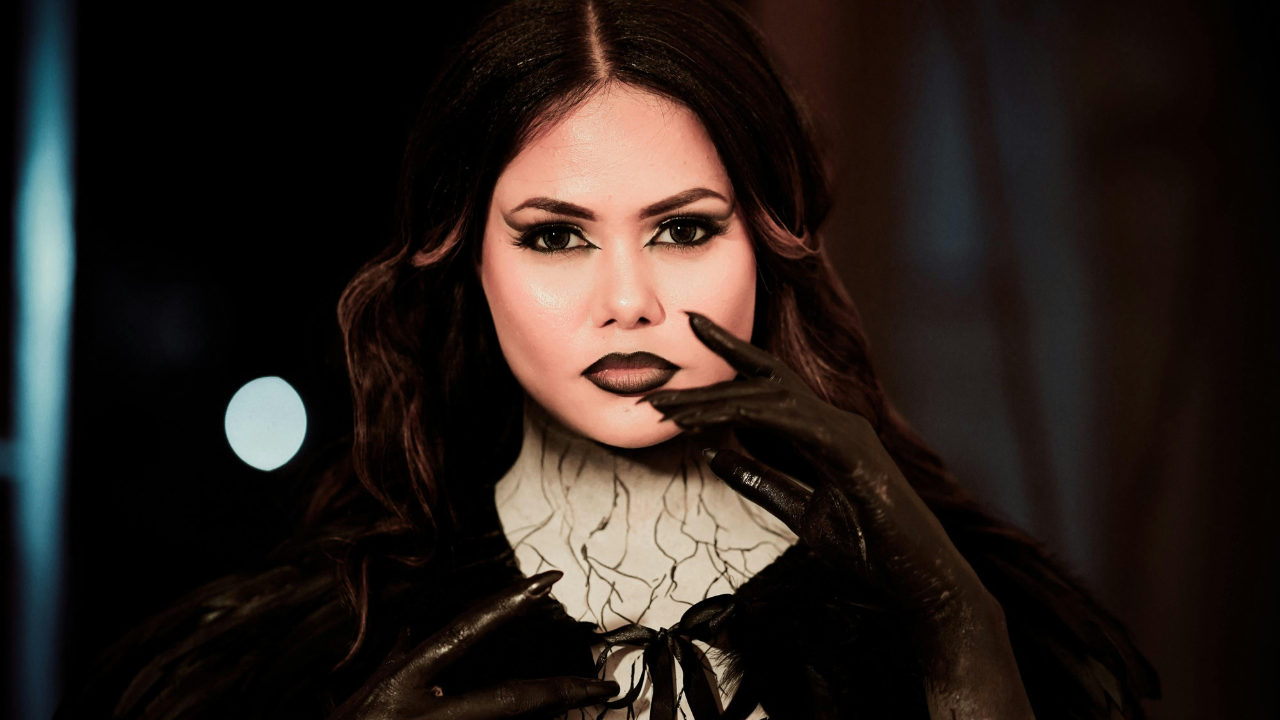
When the phrase Dark Feminine is mentioned, the collective imagination often rushes to a particular visual language of black lace skimming the skin, lips lacquered in deep crimson, eyes framed in kohl with a siren’s pull, silver snake-shaped cuffs wrapped around wrists and throats, stiletto heels clicking like punctuation marks. These images are compelling because they draw on centuries of cultural fashion and symbols that have been tied to danger and an aura of untouchable power.
But Dark Feminine energy is not an aesthetic. These are fashion choices, stylistic expressions that can hint at the energy, amplify it, or play with it visually, but they do not create it. The confusion happens because the visual shorthand for “dark” has been absorbed into mainstream media and influencer culture. We’ve been taught to read certain color palettes, textures, and accessories as “dangerous,” “sultry,” or “powerful.” In reality, these cues are just a curated projection that may or may not match what is actually happening in the woman’s body and psyche.
By contrast, a woman can be fully in her Dark Feminine wearing sweatpants and an oversized hoodie, hair messy, face bare of makeup, because she is in the raw experience of herself. She is feeling without numbing, confronting what hurts, and refusing to shut herself down for the sake of composure. Her magnetism is in the unflinching presence she has with her own truth.
Femininity is a Spectrum
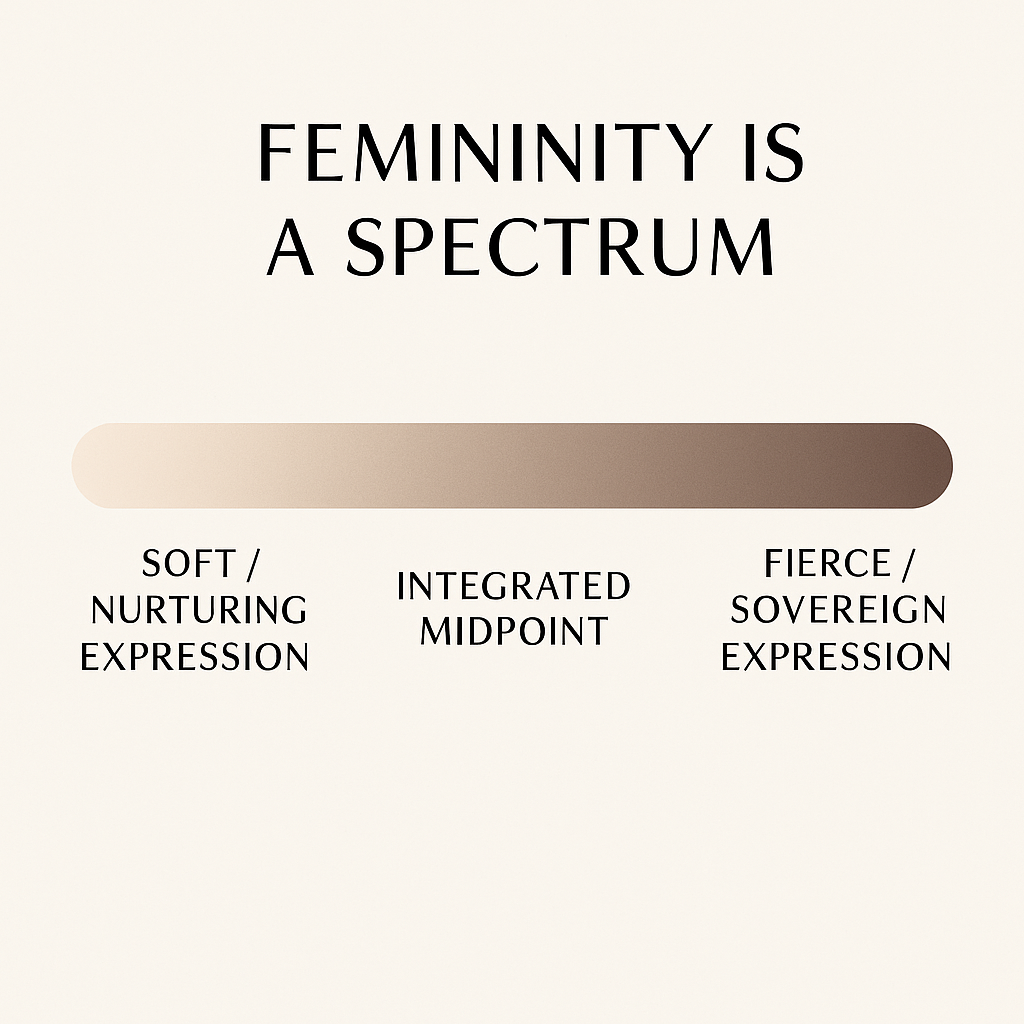
Every woman carries a full spectrum of expression inside her whihc includes soft and sharp, nurturing and fierce, surrendered and sovereign. These are different expressions of the same source of power. Yet, for centuries, society has carved this spectrum in half, elevating the traits that are easier to control, like receptivity, emotional caretaking, while suppressing the parts that are harder to manage like assertiveness and an unflinching sense of justice.
I’ve lived this conflict in my own body. There is a part of me that genuinely loves being soft and caring. I enjoy holding space for others and moving through the world with openness. But when I stay in that mode for too long, when I live too much in the light, pleasing, nurturing expression of the feminine, I can feel myself start to fade in power.
I begin to suppress the part of me that is a natural leader, the organizer who sees how systems could be better and refuses to stay silent. I push down the voice that speaks during injustice and takes tangible action to create better conditions, because somewhere deep inside I’ve been told that these qualities don’t belong to “feminine” women.
And that’s the lie, one that has cost women more than we realize. The idea that feminine energy is only gentle, patient, and yielding is not a celebration of women. It’s a form of suppression, to me atleast. It’s a way of keeping us small and contained. In reality, feminine energy can be commanding and fiercely protective and still be entirely feminine.
When we box femininity into a fixed identity, we amputate the sharp, necessary edges that allow women to protect themselves and lead others. The truth is that both sides are vital. The feminine can be surrendered without being powerless, and sovereign without being cold. She can cradle a child in one arm and dismantle a corrupt system with the other.
When you claim the whole spectrum, soft and sharp, nurturing and fierce, you step out of the cage of “acceptable” femininity and into the authentic feminine.
Misconceptions: What The Dark Feminine Isn’t About
It’s not about being mean, cold, or emotionally detached.
One of the most common misunderstandings is that the Dark Feminine is an unfeeling ice queen who cuts people down for sport. This misconception exists because many people confuse clarity with cruelty. In reality, the Dark Feminine holds boundaries without emotional theatrics. Her detachment, when it happens, is a conscious act of self-protection that keeps her energy focused on what truly matters.
It’s not about chaos for the sake of chaos.
The Dark Feminine is often painted as a wild, destructive force that thrives on drama. But her destruction is intentional, it serves a purpose. She dismantles illusions, false promises, and systems that suffocate truth. She disrupts what’s fake so something authentic has space to grow
It’s not about rejecting softness or love.
Many assume that if a woman is in her Dark Feminine, she must have shut down her capacity for tenderness. The truth is, she still loves deeply but she refuses to perform that love as a way to keep others comfortable or invested. Her affection is genuine because it’s not a default setting; it’s a deliberate choice.
It’s not just rage or trauma expression.
Yes, the Dark Feminine makes space for anger and intensity, but she does not treat her relationships or her environment as dumping grounds for unprocessed emotion. She is capable of holding the weight of her own feelings without offloading them onto others. Her rage, when expressed, is clear and focused, it names the harm and demands accountability rather than spiraling into destruction.
Conclusion
Now that you understand the dark feminine on a deeper level, I hope you invite her back in as a part of you that has been waiting to be welcomed home. She is not here to take away your light feminine energy; she is here to make your connection to true femininity complete again.
I hope you learn to love the entire spectrum of your femininity, even when it doesn’t look like what other people expect.
Over time, the more you live from this truth, the more you stop bending yourself into shapes that keep others comfortable. You begin to embody your true joy and your true essence and become the woman you were always meant to be.
FAQ
The dark feminine is the other side of feminine energy, the part that holds power, rage, desire, and truth without apology. While the light feminine is often associated with softness, nurturing, and compassion, the dark feminine energy is about shadow work, self-discovery, and embracing the full spectrum of a woman’s being. She is the femme fatale, the goddess of transformation, the archetype that refuses to be tamed. This is about reclaiming the darkness we’ve been taught to fear, our potent energy, our deep intuition, our ability to break free from limiting beliefs. When a woman connects with the dark feminine, she steps into her authentic identity, owns her femininity, and no longer feels afraid of her emotions, sexuality, or power. It’s the part of femininity that can both nurture like Mother Earth and destroy what’s false, making space for new life.
Activating dark feminine energy is a journey of shadow work, embodiment, and self-love. Start by creating space for self-discovery, alone time, journaling, or art that lets your emotions speak. Explore your sexuality in ways that feel authentic, without shame or performance. Tap into dark seduction by allowing your body, voice, and eye contact to communicate confidence and desire because you enjoy inhabiting your own power. In a given moment, ask yourself what you truly want, and say it out loud. This practice helps you break free from fear, people-pleasing, and the habit of softening your truth. Connecting with nature can also awaken this energy, walking barefoot on the earth, swimming in wild water, or simply being still under the moon.
Carl Jung’s work on the shadow is key to understanding the dark feminine. In Jungian psychology, the shadow holds the parts of our identity we’ve suppressed or denied, rage, ambition, desire, jealousy, and grief. For women, these traits often get labeled as “unfeminine,” which pushes them into the unconscious. Jung also spoke of the anima and animus, the feminine and masculine energies within each human being, and how integrating these makes us whole. The dark feminine appears in the unconscious as the mysterious, magnetic archetype that carries repressed instincts and deep wisdom. She can appear in dreams as a goddess, a witch, a mother, or a femme fatale figure who forces transformation. By facing her through shadow work, we reclaim the traits that give us our full spectrum of feminine power.
The power of the dark feminine is about embracing the full truth of your femininity, not just the parts that are soft and acceptable, but also the parts that are raw, intense, and untamed. This potent energy comes from emotional honesty, deep intuition, and the willingness to act from your authentic desires. It is the power to destroy what no longer serves you, to stand sovereign in relationships, to heal old wounds through shadow work, and to create from a place of wild freedom. This power appears in many forms: the creative process that turns pain into art, the fierce protection of a mother, the sensual magnetism of dark seduction, and the ability to inspire other women to embrace their own full spectrum of traits.
