
Table of Contents ▾
Yoni weights can be Kegel balls, yoni eggs, Ben Wa balls, or other rounded objects made for vaginal use. Once inserted, the weight creates a downward pull that the pelvic floor must respond to. The muscles contract to keep it in place, and in that effort you start to build measurable strength and sharper control.
In this article, we’ll look at what yoni weights are, how to use them safely, and the specific pelvic floor exercises that can support for pelvic health and sexual vitality.
What Are Vaginal Weights or Kegel Balls?

Vaginal weights are small, smooth objects designed for insertion into the vaginal canal to create a direct physical challenge for the pelvic floor muscles. Most are between the size of a grape and a small egg, with weights ranging from about 20 grams up to 100 grams or more, depending on the tool and your experience level.
Materials a yoni weigh can be made of includes medical-grade silicone, stainless steel, borosilicate glass, or polished crystals. The surfaces are non-porous and rounded to prevent irritation and make cleaning simple.
To use a vaginal weight, you gently insert it into the vagina, much like a tampon. As soon as it’s in place, gravity encourages the weight to shift downward. The pelvic floor muscles must contract and “hug” or “lift” it to prevent it from slipping out. Most women start this practice lying down, focusing on the sensation of gripping and releasing, then progress to standing or even walking for a greater challenge.
The physical feeling is distinct, there’s a sense of pressure or fullness low in the pelvis, and if the muscles relax, the weight will begin to slip, creating immediate feedback to re-engage the pelvic floor.
Types of Vaginal Weights
Silicone Dumbbells: These are beginner-friendly tools with a soft, flexible surface and a shape similar to a miniature barbell. Silicone dumbbells are gentle on sensitive tissue and easy to insert or remove. They usually come in sets with increasing weights, which makes them ideal for building up strength step by step. Their larger size and lighter weight help you develop muscle coordination before progressing to heavier challenges.
Stainless Steel Balls: Small and dense, these balls offer more resistance in a compact package. Stainless steel weights require a stronger, more precise muscle contraction to hold in, and their non-porous surface allows for thorough sterilization. Because they can feel slippery, they directly test your pelvic floor strength and control.
Weighted Vaginal Cones: Tapered and smooth, cones are designed for easy insertion and a snug fit. Many come with removable or adjustable weights, allowing you to gradually increase the challenge as your strength improves. The shape encourages your pelvic floor muscles to grip and lift, training both endurance and coordination.
Glass Vaginal Weights: Made from solid borosilicate glass, these weights are non-porous, easy to clean, and temperature-responsive for sensory variety. The firmness of glass means that you feel a clear, steady pressure, which provides instant feedback if your muscles disengage.
Hybrid or Adjustable Weights: These combine the comfort of silicone with the ability to customize resistance. Some have soft exteriors with metal cores, while others allow you to add or remove small weights inside.
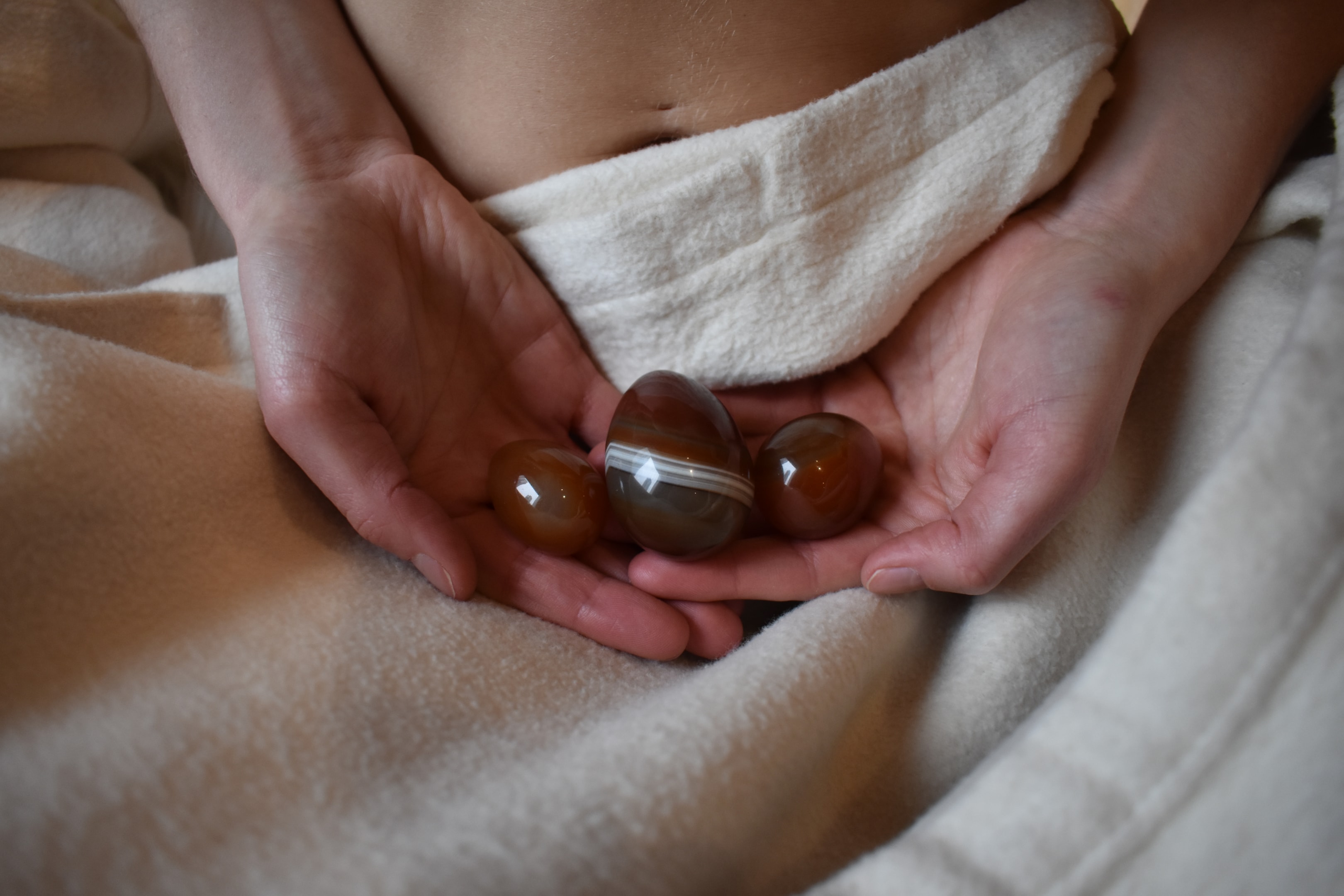
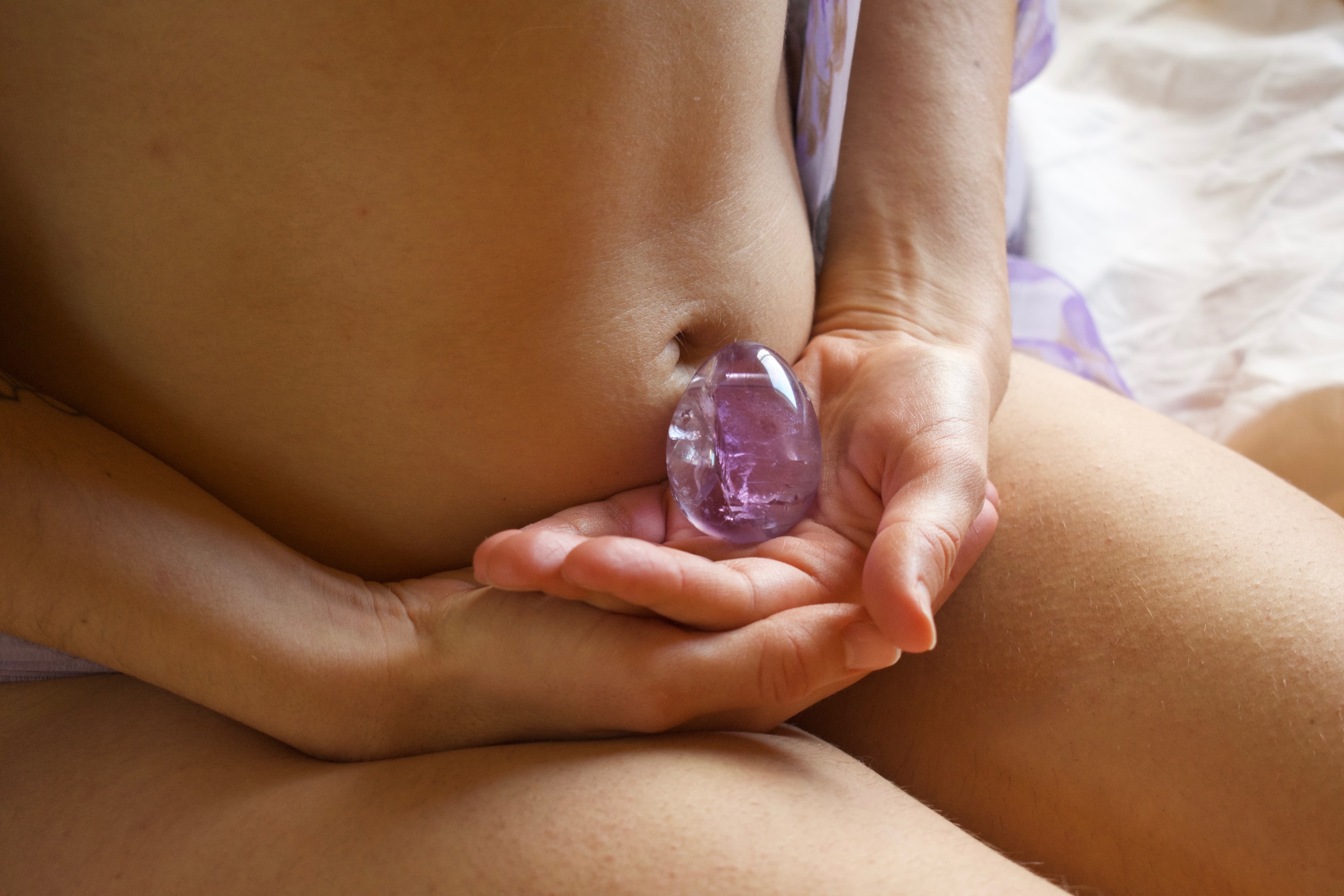
Yoni Eggs: Yoni eggs are polished, egg-shaped crystals made for comfortable vaginal use. These can be carved from a variety of non-porous, body-safe stones. Yoni eggs are used for both muscle training and emotional or sensual practice. The egg shape encourages you to coordinate gripping and lifting, which builds muscle awareness. Some eggs are drilled for easy removal with a string, making them practical for regular or ritual use. Many women select specific crystals for their unique density or personal meaning.
Why Is Pelvic Floor Muscle Training & Kegel Exercise Important?
Pelvic floor muscles let you control urination and bowel movements with precision, and are also responsible for how much sexual pleasure you feel. They secure your bladder and uterus inside your pelvis and give you the ability to squeeze and release these areas when you need to. When these muscles are working well, you’ll notice more internal grip and distinct pressure when you touch yourself or have something inside your vagina.
Strong pelvic floor muscles support your pelvic organs, and they regulate when your body opens or closes at the urethra or anus. Regular training improves blood flow, leading to faster natural lubrication when you’re aroused and a quicker recovery from swelling or heaviness after childbirth or pelvic surgery.
If your pelvic floor muscles become weak, urine might leak when you jump or lift something heavy. Passing gas can get harder to control, and a heavy feeling may develop in your pelvis. Some women feel less grip or reduced pleasure during sex, while others notice a soft bulge at the vaginal opening, especially after giving birth or years of straining.
Who Needs to Do Kegels and Pelvic Floor Exercise?
Yoni weights and Kegel exercises can be used by women at any stage of life. They’re often most effective when there’s a specific pelvic floor concern, like bladder leaks or loss of vaginal tone after childbirth or surgery. In these cases, the added resistance helps rebuild strength and re-establish muscle engagement in a way that body-weight Kegels alone often don’t.
Before beginning a training routine, test your pelvic floor. Lying down, contract as if stopping the flow of urine. If you feel a clear squeeze without pain, gentle strengthening can be helpful. If you notice discomfort or realize your muscles are clenched even at rest, it’s best to work on release first.
When Should I Avoid Vaginal Weights?

Do not use vaginal weights if you have:
-
Active pelvic infection like yeast, bacterial vaginosis, trichomoniasis, or urinary tract infection.
-
Pelvic organ prolapse that has not been cleared by a pelvic health provider.
-
Unexplained vaginal or pelvic bleeding
-
Severe pain with penetration or ongoing pelvic/vulvar pain that hasn’t been assessed by a clinician.
-
Recent pelvic or gynecological surgery unless cleared by your surgeon or pelvic PT.
-
Pregnancy, unless you have explicit guidance from a pelvic floor specialist.
-
An intrauterine device (IUD).
-
Known or suspected gynecological cancer.
Kegel Exercises with Yoni Weights or Eggs
Quick Flicks (Fast Pulses)
Insert your egg or weight while seated or lying down with knees bent. Imagine stopping the flow of urine and contract around the weight quickly, then let go completely. Each squeeze should feel like a firm hug around the object, followed by a full release. Aim for ten pulses, resting in between sets so the muscles don’t fatigue.
Endurance Holds
With the weight inside, contract and lift as if drawing the object upward. Hold that steady grip for five to ten seconds, then release fully. You’ll feel the weight pressing lower as you let go, use that sensation to confirm you’ve relaxed all the way. Repeat for eight to ten rounds.
Reverse Kegels (Lengthening)
Insert the weight and allow your pelvic floor to soften around it. As you inhale, imagine gently pushing it down and out, as if releasing urine or gas. This movement creates expansion and stretch in the muscles. Hold the lengthened position for five seconds, then return to rest. Six to eight cycles help train your body to release as fully as it contracts.
Which Vaginal Weight Should You Use?

For Beginners: Larger Yoni Eggs or Cones
If you’re just starting pelvic floor training or can’t easily feel your internal muscles, begin with a large yoni egg or a lightweight silicone vaginal cone. Larger tools give the muscles more surface area to grip, which makes it easier to notice when you contract and release. Silicone cones are gentle and often come in starter sets, making them easy to handle in early practice.
For Intermediate Training: Medium Yoni Eggs or Ben Wa Balls
Once you can feel your muscles engage, move to a medium-sized yoni egg or a set of Ben Wa balls. Medium eggs require more active gripping to stay in place, while Ben Wa balls are smaller and denser, offering more resistance in a compact size. These are ideal for women rebuilding tone after childbirth or increasing strength following regular beginner practice.
For Advanced Strength: Small Yoni Eggs or Stainless Steel Weights
To maximize muscle challenge, use a small yoni egg or a stainless steel weight. Smaller eggs leave less surface for your muscles to hold, demanding greater precision, while steel adds significant density in a small shape. These options are best for women who already have established strength and want to refine endurance and control, especially while standing or walking.
For Sensation and Awareness: Crystal Yoni Eggs in Different Sizes
If your goal is to heighten internal awareness and subtle sensation, crystal eggs are the best choice. Large eggs support gentle grip and body presence. Medium eggs add more feedback for women ready for active engagement. Small eggs challenge precision while also amplifying warmth, blood flow, and responsiveness. Each crystal type also carries its own qualities that can influence how practice feels in your body.
For Practical Continence Training: Graded Vaginal Weight Sets
When the focus is on reducing leaks or improving pelvic control in daily life, a set of graded vaginal weights is most effective. These sets usually start with light silicone cones or balls and progress to heavier stainless steel or weighted dumbbell-style inserts. By working step by step through the weight range, you can track clear progress in how long and how strongly you can contract without fatigue.
Should I Be Engaging My Pelvic Floor Muscles the Entire 15 Minutes?
A healthy pelvic floor practice alternates muscle activation and release, rather than holding a contraction for a long period. During a training session, your pelvic muscles respond best when they have cycles of effort and rest. This approach allows the muscle fibers to recover between squeezes, reducing the chance of fatigue or lingering tightness after practice.
For effective results, aim for short, controlled contractions, such as lifting and gripping the muscles for five seconds, then fully relaxing for another five seconds. Repeat this cycle eight to ten times, focusing on feeling the difference between effort and ease. If you notice your muscles tiring or grip getting weaker, pause and give your body time to recover with a few breaths or gentle movement.
Best Practices Before and After Using Yoni Weights
Before Using:
-
Empty your bladder and, if needed, your bowels. This reduces pelvic pressure and makes insertion smoother and more comfortable.
-
Wash your hands and clean the egg or weight with warm water and mild, unscented soap. Rinse thoroughly and dry completely to lower the risk of irritation or infection.
-
Apply a water-based, fragrance-free lubricant if you notice dryness or resistance. Lubricant helps the egg or weight slide in easily and protects delicate tissue.
-
Check for cracks or rough edges on the tool before use. Only insert smooth, intact eggs or weights for safe use and removal.
After Using:
-
Remove the egg or weight gently by relaxing your pelvic floor and breathing out slowly. If you feel any resistance, pause and take a few breaths until the tool slides out with ease.
-
Wash the tool again with warm water and mild soap, then dry it completely. Store it in a clean, dry container away from direct sunlight.
-
Check your body for muscle fatigue or lingering pressure after removal. If you notice tiredness or pressure, take a few minutes to lie down or stretch gently.
-
Finish with two cycles of slow, full breaths and relaxed pelvic muscles. This practice helps your body transition to a resting state and prevents unnecessary tightness after use.
Conclusion
There are many ways to bring weight into the vagina and wake up the pelvic floor. Some women prefer the feel of steel, others like the softness of silicone, and some enjoy the firmness of glass. Each option offers its own feedback, but at WAANDS™ we always come back to the beloved yoni egg.
A yoni egg is beautiful to hold, smooth against the skin, and luxurious to use due to being created out of beautiful gemstones. Out of all the tools available, it’s the one that turns pelvic floor training into something that feels like a ritual, like it is a special and sacred act.
FAQ
Yoni eggs don’t “make you tighter” in the sense of narrowing the vagina. What they do is help strengthen the pelvic floor muscles when used as part of a structured pelvic floor exercise. By providing resistance, the egg trains the muscles to contract and release with more control. Over a few weeks, many women notice improved bladder control, more sensation during sex, and a firmer internal grip. If you have a weak pelvic floor after childbirth or stress urinary incontinence, yoni eggs can be a game changer when combined with progressive weights and guidance from a pelvic floor physical therapist.
Kegel exercise weights are inserted vaginally to challenge the pelvic floor the same way dumbbells challenge your arms, helping with various pelvic floor issues. When you keep the weight inside while standing or moving, the muscles have to contract and hold. This strengthens the pelvic floor, supports the pelvic organs, and improves continence. Research shows that consistent pelvic floor training with vaginal weights reduces urinary symptoms like leaks and heaviness in the pelvis. The result is not just “tightness,” but better pelvic strength, endurance, and awareness.
Yoni egg weights are polished crystal eggs carved from body-safe stones such as jade eggs, rose quartz, clear quartz, or obsidian. They come in small, medium, and large sizes and can be drilled for easy removal with a string. The larger eggs and the lightest weight are best for beginners, as they’re easier to feel and grip. As strength improves, women can gradually increase to smaller or heavier weights for more challenge. These tools are widely used for pelvic floor strengthening, pelvic health, and intimate self care.
