
Table of Contents ▾
Perineal massage is the practice of manually stretching and softening the tissue between the genitals and the anus. This is one of the most tender, most overlooked, and most deserving areas of the body.
Regular massage here supports pelvic floor health and releases deep tension in the pelvis. It is also one of the most effective tools available for birth preparation and postpartum recovery. Both men and women can benefit from this practice at any stage in their life.
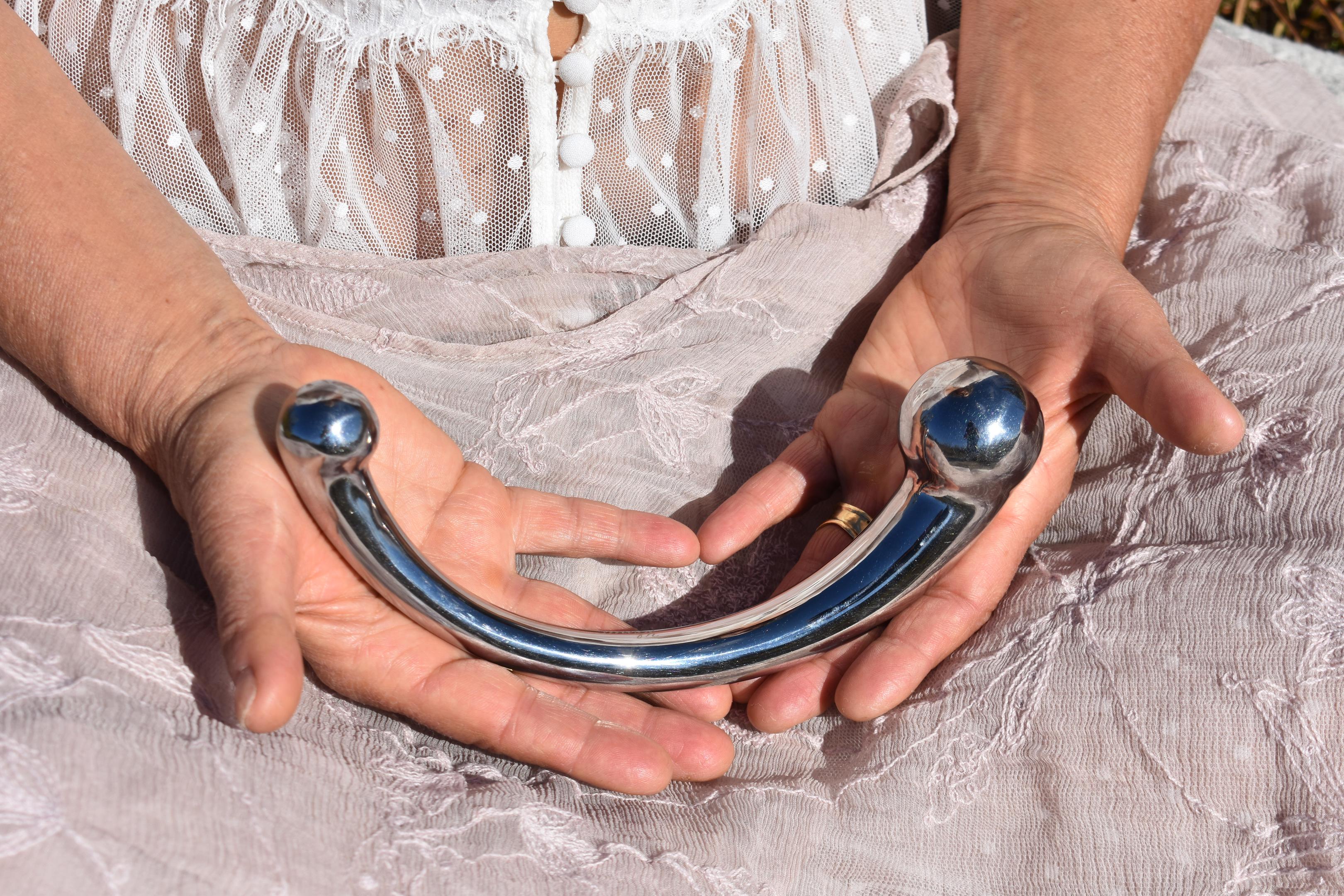
Below, we share our recommended WAANDS™ tools for this practice.
What Makes a Tool Effective for Perineal Massage
Not all tools are created equal, and when it comes to perineal massage, the design of what you use has a direct impact on what the practice can actually deliver.
Shape and curve are the first consideration. The perineum sits at an angle that makes straight, rigid tools awkward to use effectively. A gently curved design follows the natural contour of the vaginal opening, allowing you to apply consistent pressure along the posterior wall and perineal tissue without straining your wrist or losing control of the angle. When the tool fits the body's geometry, you can stay relaxed and present.
Surface texture is equally important. The tissue of the vaginal opening is highly sensitive, and anything with texture, roughness, or micro-abrasions will create friction that works against the massage rather than with it. A truly smooth, polished surface glides cleanly against the tissue, allowing the pressure to go deep without dragging. This is one of the reasons polished crystal, glass, or steel with a hardness above 5 mohs is exceptional for this practice.
Care of the Perineum: Tips for Reducing Pain & Swelling
The Amrita Wand® For The Pelvic Floor
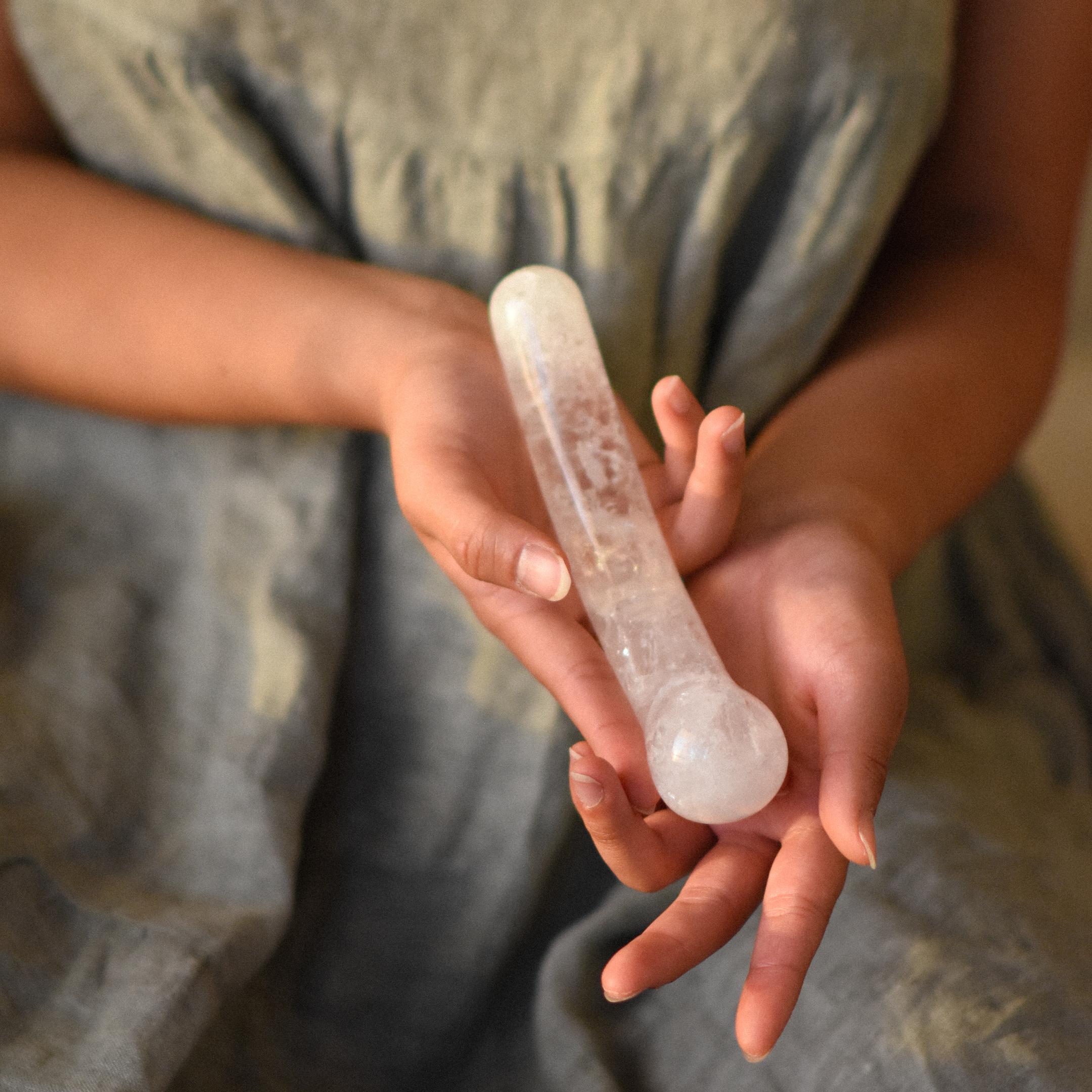
Amrita Wand® | Clear Quartz Pleasure Wand
The Amrita Wand® was designed for deep, intentional internal work. The bulbous rounded end creates a smooth, broad surface that can be positioned at the vaginal opening to apply gentle outward stretch to the perineal tissue without concentrating pressure into a single point.
The wand's curve allows you to angle sustained pressure toward the perineal body and the central point of the perineum where tearing most commonly occurs during birth and where scar tissue most commonly develops afterward. Holding gentle, steady pressure here, rather than moving aggressively, is what signals the pelvic floor muscles to release. The Amrita Wand® has a shape that holds the angle without effort, so your attention can stay with your breath and your body rather than the mechanics of the tool.
The crystal itself contributes a firm, unwavering feedback that lets you feel the tissue responding in real time. As the perineum softens and yields under pressure, you feel it clearly. That quality of feedback makes the practice more conscious and more effective.
Beginner Friendly Classic Crystal Wands
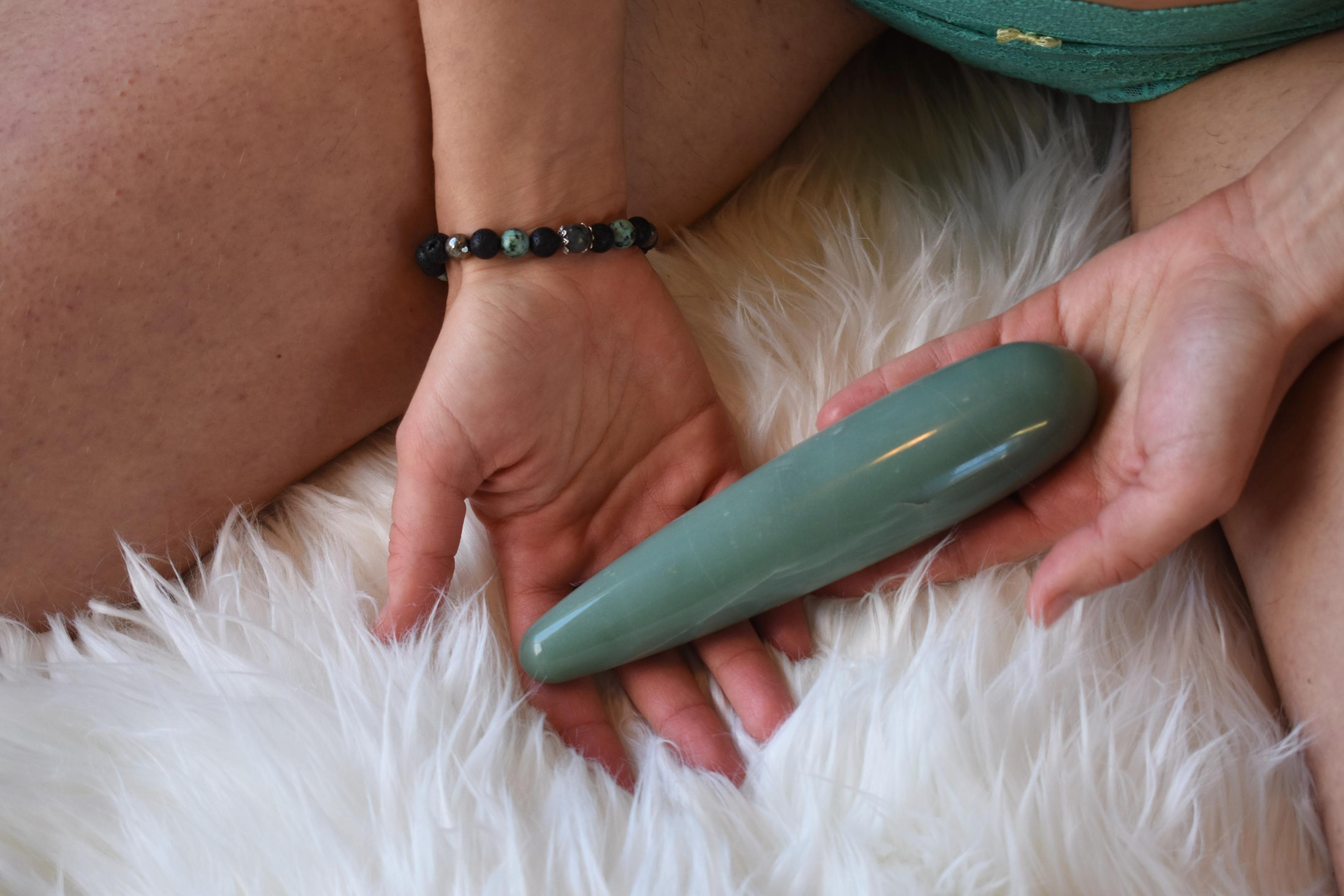
Classic | Indian Jade Massage Wand
The Classic Crystal Wand has a girthier profile that creates a sense of fullness at the vaginal opening that gently encourages the surrounding tissue to expand and relax through the body's natural response to sustained, comfortable pressure.
Tense pelvic floor muscles often respond better to fullness than to directed pressure. When the vaginal opening is gently filled, the muscles receive a clear signal to soften and accommodate rather than contract. This makes the Classic Wand particularly effective for people whose pelvic floor tension is habitual or stress-related and the kind of chronic tightness that builds quietly over years rather than arriving with a specific event.
The silky smooth crystal surface is integral to this. Friction at the vaginal opening activates the very muscles you are trying to release. A surface that glides cleanly and evenly against the tissue allows the experience to remain soft and receptive throughout, which keeps the nervous system calm and the pelvic floor open to the work.
Venus Wand® for Advanced Perineal Massage
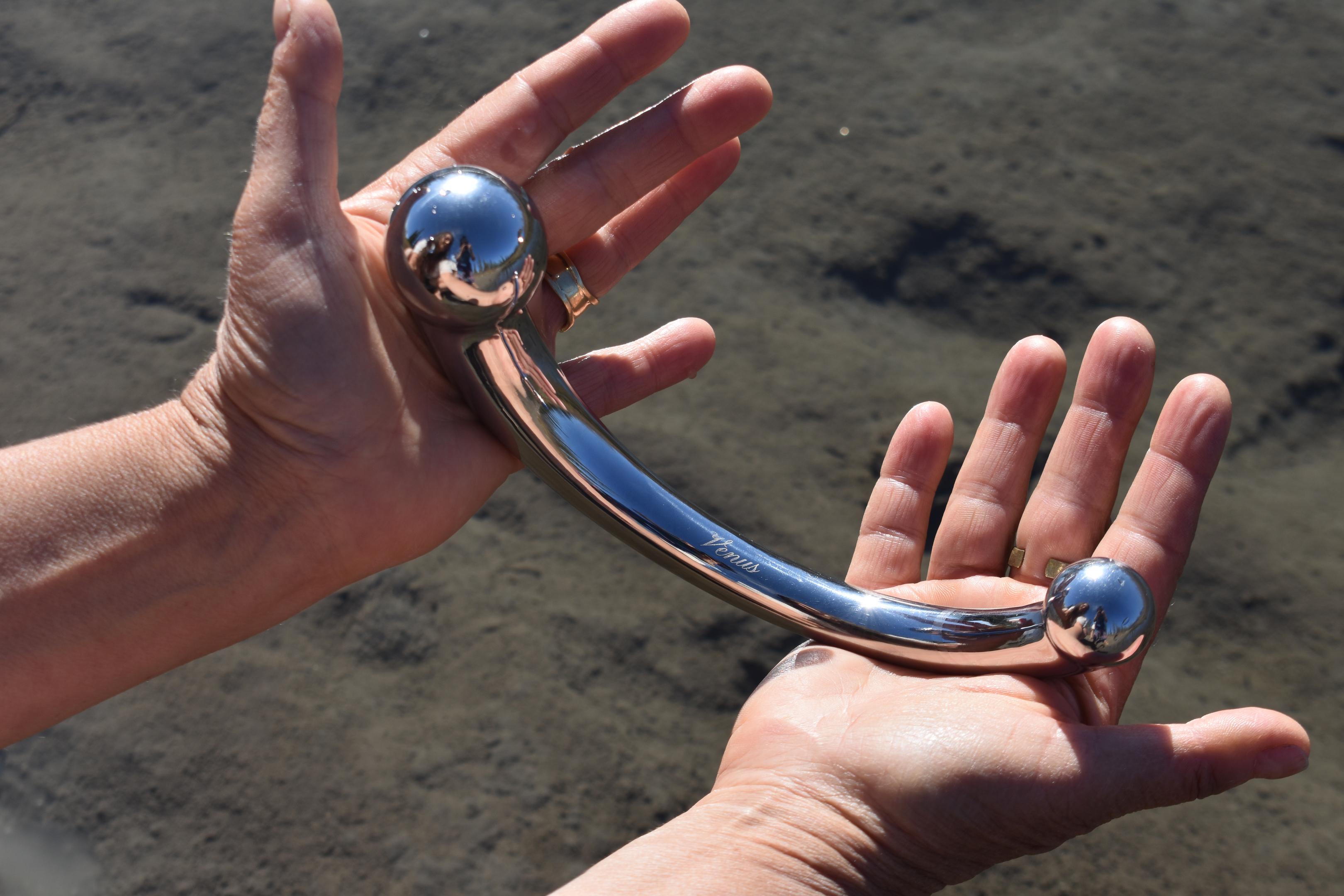
Where gentler curves offer broad, distributed contact, the Venus Wand®'s pronounced arc allows you to target the perineal body with an accuracy that is difficult to achieve with other tools. You can position the wand to apply direct, sustained pressure to specific points along the posterior vaginal wall and perineum, which are the areas where tension accumulates most deeply and where scar tissue tends to be most dense and least addressed.
The weight of medical-grade stainless steel does the work that your hand would otherwise have to. With a lighter tool, maintaining consistent pressure requires continuous muscular effort, which creates fatigue and tension that travels into the pelvic floor. The Venus Wand® holds its pressure through gravity alone. You position it, you breathe, and the wand does the rest. This makes it significantly easier to stay genuinely relaxed during the practice, which is the condition under which the pelvic floor actually releases.
Stainless steel is also exceptionally hygienic, non-porous, easy to sterilise, and compatible with any lubricant. For perineal work, where tissue is often healing or sensitive, this matters.
The dual-end design allows you to personalise your practice. Different ends offer different diameters and angles, meaning you can shift between broader stretch work and more targeted pressure within a single session, or adapt the tool to wherever you are in your healing process.
How to Use Perineal Massage Tools Safely
Work with pressure, not movement.
The most common mistake is treating perineal massage like a rubbing or stroking motion. Friction at the vaginal opening creates resistance in the very muscles you are trying to release. Instead, position your tool at the vaginal opening, apply gentle downward pressure toward the perineum, and hold. Let the pressure do the work. Small, slow stretches outward toward the sides of the vaginal opening are appropriate, but they should feel like a gradual, sustained expansion, not a pulling motion.
Breath is not optional.
The pelvic floor and the diaphragm move together. When you hold your breath or breathe shallowly, your pelvic floor contracts. Long, slow exhales are your most effective tool for encouraging the perineal tissue to soften and open under pressure. Before you begin, take a few full breaths to settle your nervous system. During the massage, exhale deliberately into any area of resistance. If you notice your breath shortening, pause and reset before continuing.
Know the difference between stretch and resistance.
Productive perineal massage has a quality of mild, manageable tension, a sensation of stretch that stays within a range you can breathe through and remain present with. This is the tissue yielding. Resistance feels different nd sharper, more localised, or accompanied by an instinct to pull away. When you feel resistance, do not push through it. Reduce your pressure, breathe, and wait. The tissue will often soften on its own if you give it time rather than force.
Discomfort is a signal, pain is a stop sign.
Some sensitivity during perineal massage is normal, particularly around scar tissue or areas of chronic tension. But sharp pain, burning, or any sensation that causes you to tense and brace is your body telling you to stop. Back off the pressure, reposition, or end the session. More is not better here, a shorter session done within a comfortable range is significantly more effective than a longer one that triggers guarding in the pelvic floor.
Do not overstretch.
The goal is gradual, cumulative change in tissue quality, not maximum stretch in a single session. Overstretching can cause micro-tears, increased inflammation, and a protective tightening response that sets your progress back. Especially in pregnancy and early postpartum, err consistently on the side of less. The tissue will open over time.
Read: The Power of the P-Spot: Perineal Massage for Him Made Easy
FAQ
At WAANDS, our crystal wands, particularly the Amrita Wand® and Classic range are well suited to perineal massage thanks to their smooth, frictionless surface, firm feedback, and ergonomic curves. The Venus Wand® in stainless steel is a highly recommended option for women wanting more targeted pressure and effortless grip. Some customers also find it helpful to use a mirror when first starting out, to better understand the anatomy they are working with and ensure correct tool placement.
Water based lubricants are essential for perineal massage regardless of which tool you use as they reduce friction, protect sensitive tissue, and make the experience more comfortable throughout. Always ensure your lubricant is BPA free and free from irritants, particularly if you are pregnant or in postpartum recovery.
For the vast majority of women who use them consistently, yes, the benefits are real and well documented. Regular perineal massage in the third trimester has been shown to reduce tearing during childbirth, and ongoing use postpartum supports scar tissue healing, pelvic floor relaxation, and the restoration of sensation and comfort at the vaginal opening. Customers who incorporate a pelvic wand into their routine consistently report improvements in pelvic muscle tension, comfort during intimacy, and overall body awareness in the pelvic region.
The purchase of a quality tool is also a long-term one. A crystal or stainless steel wand, properly cared for and washed after each use and stored in a dry place away from direct sunlight will last indefinitely.
Yes, self-administered perineal massage is not only possible but common and highly recommended as a regular practice. A purpose-made pelvic floor wand makes self-massage significantly more accessible than using fingers alone, giving you better reach, more consistent pressure, and a grip that doesn't fatigue.
That said, if you are pregnant, have recently given birth, are navigating pelvic pain, or have any concerns about your pelvic floor health, it is always worth speaking with a doctor or pelvic floor physiotherapist before beginning. A physician or specialist can help you establish appropriate frequency, pressure, and technique for your specific situation and can rule out any contraindications. Anxiety about where to start is common, and a brief consultation can make the practice feel far more accessible. Many pelvic health practitioners now include perineal massage guidance as a standard part of their care.
The most widely recommended time to begin is around 34 to 36 weeks of pregnancy, when the body is naturally preparing for birth and the perineal tissue is already becoming more pliable. Starting at this stage and massaging consistently, about three to four times per week gives the tissue enough time to respond before labor begins.
Outside of pregnancy, there is no single correct starting point. Postpartum women can typically begin gentle perineal massage once initial healing is complete, usually around six weeks after delivery, though your doctor should confirm this based on your individual recovery. Women using perineal massage for pelvic floor relaxation, scar tissue work, or general body awareness can begin at any stage. Beginner friendly tools like our Classic Crystal Wands make it easy to start slowly and build from there.
