
Table of Contents ▾
A yes/no pendulum is a great tool to use if you’re unsure of something and want a clear, body-based answer about what to do next. Pendulums have been used for centuries to access intuitive guidance by translating your body's subtle responses into simple movements: yes, no, or unclear.
You don’t need a special background to use one, just a weighted object suspended from a string, chain, or cord. Many people use crystals, metal, or wood. Some tie a ring or key to a thread.
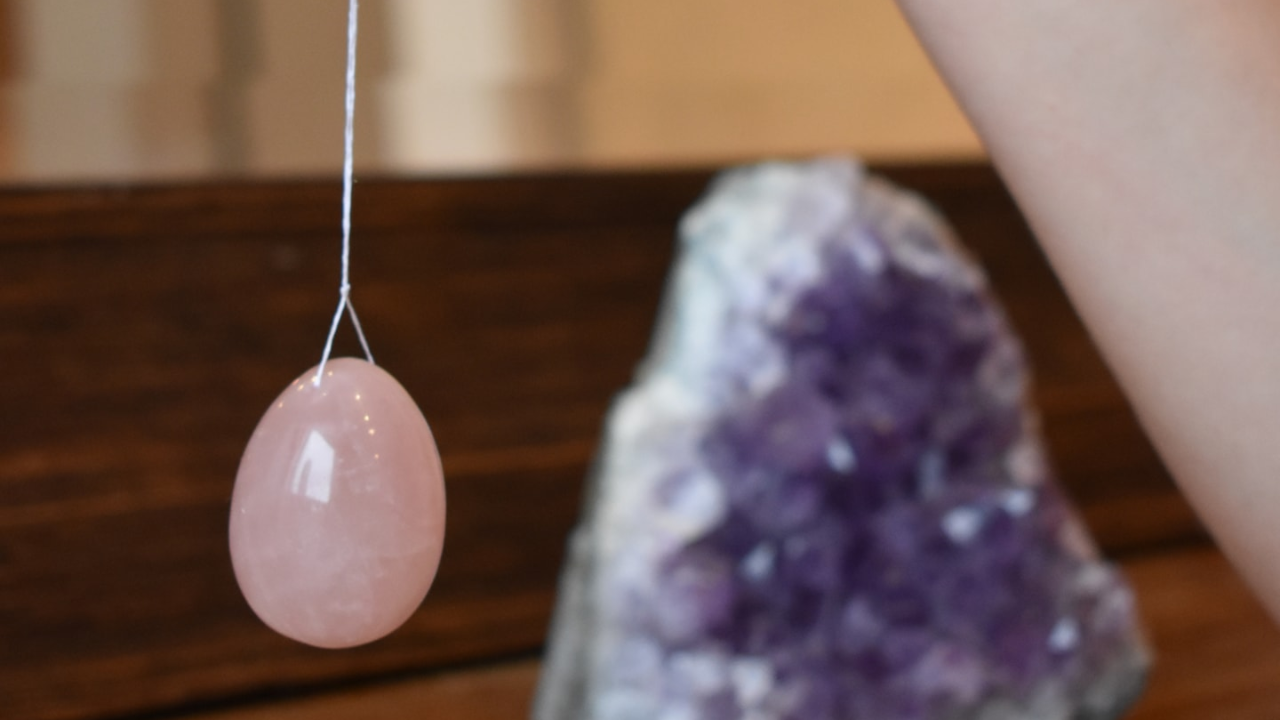
If you’ve worked with a yoni egg, you already have a powerful pendulum. When used externally on a string, the same egg that once rested in your body can now reflect your deeper truth from the outside. It’s one of the most accurate ways to check in with yourself.
This guide will walk you through how pendulums work, what they’re reading, and exactly how to use them to get honest, grounded answers you can trust.
Ask The Pendulum
What Is a Yes/No Pendulum? (And What It's Actually Reading)
A yes/no pendulum is a divination tool made of a weighted object, called a bob, suspended from a cord, string, chain, or rod. The bob can be crafted from crystal, metal, glass, or wood. The most effective pendulums are made from energetically responsive materials like crystals. These stones amplify, or stabilize the frequency you’re channeling.
The pendulum responds to energetic resonance. When you ask a clear yes/no question, your field sends out a frequency, and that frequency either matches the energy of truth, or it doesn’t. The pendulum reacts to that match, when the signal is clear, the swing is clean, and when the signal is mixed, the swing is unstable or reversed.
The energy you’re working with comes from your own field, specifically the parts of you that know the answer but haven’t spoken it yet. This includes the heart, sacral, and solar plexus centers. Each of these generates an energetic response when you pose a question and the pendulum makes that response visible.
You’re watching how your energy organizes around a decision. This tool is only as accurate as the clarity of the question, and the state of the energy field being read. When they are clean, the pendulum works with sharp precision.
Tools You Can Use as a Pendulum
-
Faceted Crystal Pendulum: A faceted Crystal pendulum is made from a single piece of crystal cut into a faceted shape, usually a cone or triangle, it always has a pointed bottom for clear and sharp direction.
-
Tumbled Crystal Pendulum: A tumbled crystal pendulum is a polished crystal shaped by tumbling, then fitted with a cap and chain. Usually rounded or oval with no sharp point, it produces a slower, softer swing.
-
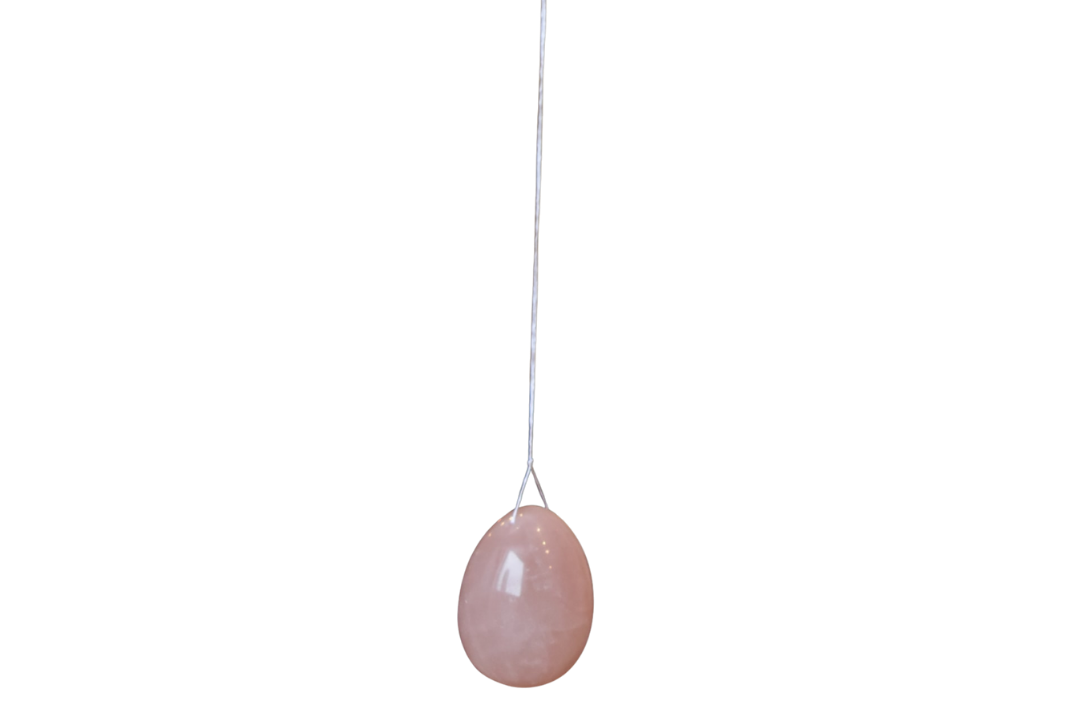
Crystal Egg Pendulum (Yoni Egg): This is a Yoni Egg with a drilled hole suspended by a string.
-
7-Chakra Stone Pendulum: These are built from seven different crystals stacked vertically or arranged as colored beads. Usually shaped into a cone or cylinder with a pointed or rounded base, they read multiple energetic layers at once.
-
Metal Pendulum: Cut from brass, copper, or stainless steel into a perfect cone or bullet shape. Always has a sharp point.
-
Wood Pendulum: Carved from woods like oak or sandalwood. They are shaped into a teardrop or cone, usually with a rounded tip.
-
Combination Pendulum (Crystal + Metal): Combination pendulums have crystal tips with a metal cap or frame. They are usually cone or triangle shaped, always with a pointed or rounded end.
-
Personal Object Pendulum (Rings, Keys, Pendants): Everyday objects like rings or keys tied to a string can also be used as pendulums. They are usually rounded or asymmetrical, making them less consistent, but deeply personal because of the daily interaction they have with you.
How to Use a Yes/No Pendulum – Step-by-Step
Step 1
If I start while I’m still carrying the energy of the day, I can feel it in the swing, it gets jittery or inconsistent. I sit on the floor or in a chair with my feet flat, and I focus on breathing into my belly until my shoulders soften. Some days I need more, and I’ll step outside for a walk or make a hot cup of our local rooibos tea to settle back into my body before I touch the pendulum.
Step 2
I hold the chain or cord between my thumb and forefinger, and I always rest my elbow on a hard surface to keep the movement clean. I’ve noticed that if I’m holding tension by clenching my jaw or gripping my thighs, it shows up in the swing. So I check my posture, relax my shoulders, and make sure the pendulum has space to move without interference.
Step 3
I usually burn palo santo in the room I’m working in, especially if I’ve had conversations or movement in the space earlier. I sweep through with tuning forks if the energy feels heavy or off. Once the space is quiet, I take a few breaths and bring my focus to what I’m asking. I don’t let myself skip this, it changes how clearly the pendulum responds.
Step 4
I start by checking what “yes” and “no” look like for that moment. My pendulum doesn’t always move the same way each day, so I watch closely and wait until the swing feels consistent. If the movement is hesitant or unclear, I take another breath and check my own energy first before assuming something’s wrong with the tool.
Step 5
When I’m too vague or emotionally loaded, I can feel the pendulum hesitate or stall. So I keep my questions simple and time-specific, focused on what’s true now, not what I want to happen. If I notice myself leaning toward an answer, I pause and reword the question until it feels neutral in my body.
Step 6
I keep my breath relaxed and my gaze unfocused. The pendulum swings best when I’m not pushing for clarity, just staying open to whatever comes. If I feel myself anticipating the answer or hoping for a certain direction, I pause. A lot of times, I have to check in again after a minute or two to make sure I’m getting a clean read.
Step 7
When I’m done, I place the pendulum in my hand and sit for a few seconds. I notice what shifted, how my body feels, and whether there’s anything left hanging. Taking this pause helps me trust the answer and not go back trying to re-ask from a place of doubt. I treat the close as part of the practice, not an afterthought.
How to Use a Yoni Egg as a Yes/No Pendulum
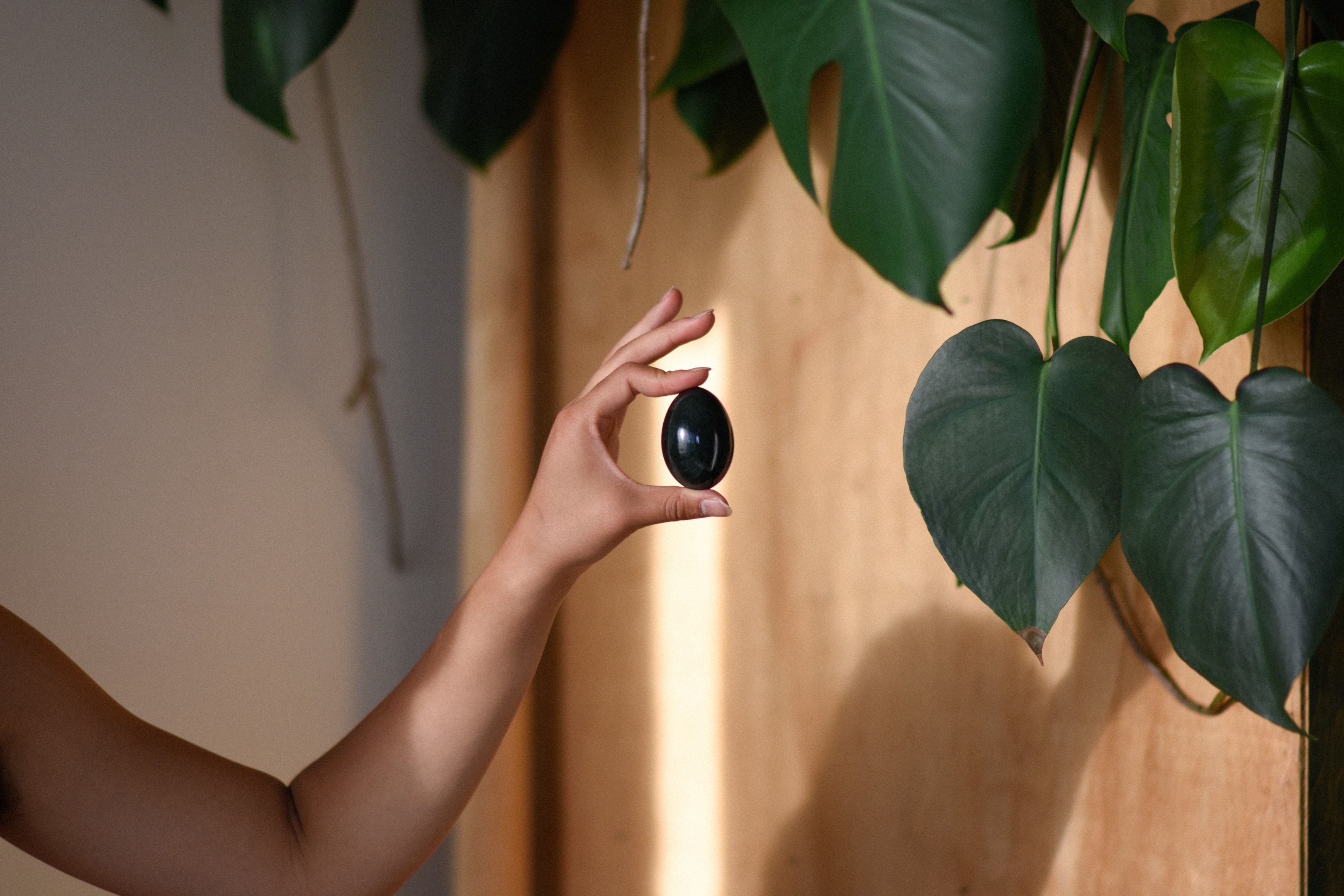
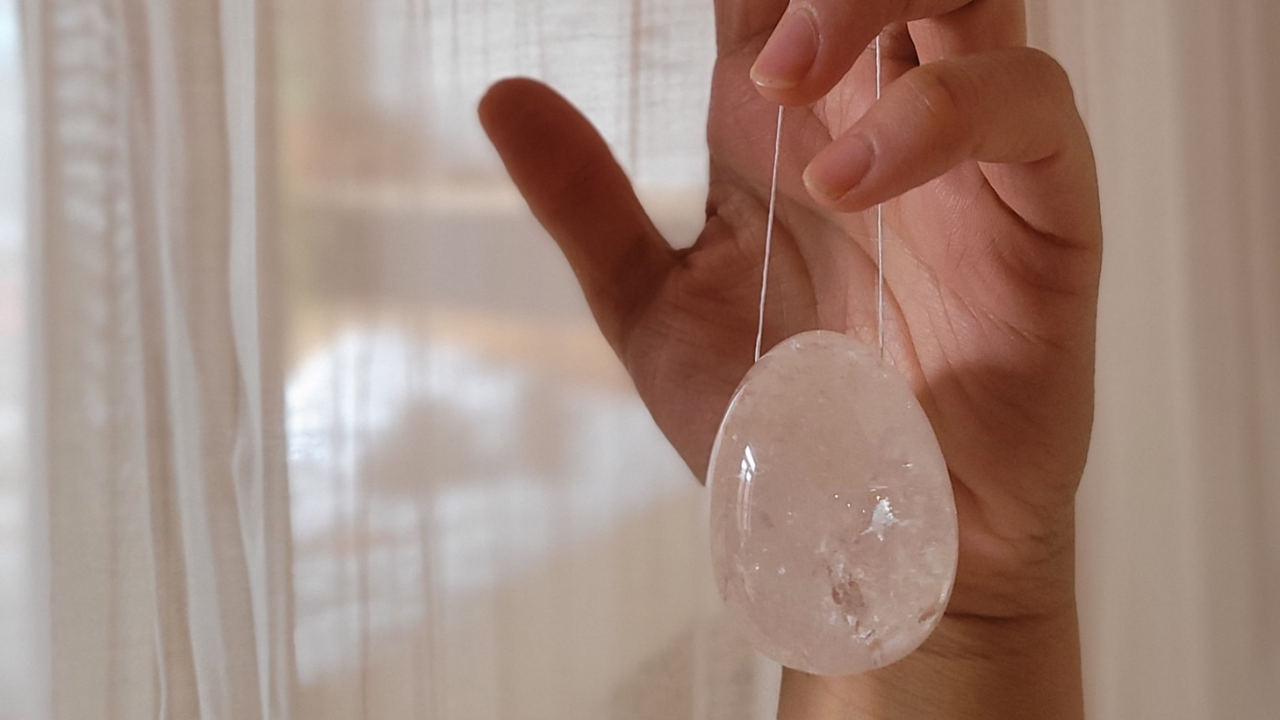
I prefer to use a drilled yoni egg as my pendulum. Because I’ve worn it internally, the egg already knows my field, it’s worked with my body from the inside out. My favorite egg to use is a Clear Quartz egg, as it can also be used for scrying during pendulum use. The egg has held my desires, and my intentions, it remembers my energy, and that memory makes the answers come through, faster and cleaner, with more accuracy.
I use a soft, unwaxed cotton cord, sometimes silk if I want something smoother, threaded through the drilled hole. I keep the cord around 6 to 8 inches long, that gives the egg just enough space to swing without feeling floaty or unstable. If the cord is too short, the swing feels tight and erratic. Too long, and it gets diluted, it starts to wobble.
When I hold it, I use my thumb and forefinger, keeping the cord steady while the egg hangs in open space below. I usually rest my elbow on my thigh or a table so I’m not trying to “hold it still”, the less effort I use, the more clearly the egg responds.
Common Mistakes + How to Stay in Integrity With the Practice
Here are some common mistakes you should take care not to fall in to:
-
Asking while anxious or overwhelmed.
I’ve tried to get clarity in the middle of a panic spiral, it never works. When my system is dysregulated, my hand shakes, my breath gets shallow, and the pendulum starts to reflect my fear instead of my knowing. Now, I breathe and wait, and sometimes I go outside. I don’t ask anything until I can feel my body settle enough to actually hear the answer.
-
Repeating a question until you get the answer you want.
I’ve done this more than once, asked, gotten a “no,” then asked again in a slightly different way, hoping it’ll flip, It doesn’t. The pendulum reads my energy, so when I don’t like the answer, it usually means I’m not ready to face what I already know. I’ve learned that if I keep pushing, I’m no longer seeking truth, I’m chasing permission.
-
Using the pendulum as the only guide.
There was a stretch where I asked the pendulum about everything, every decision, and every doubt. I didn’t trust myself, so I outsourced it, but the pendulum isn’t a replacement for intuition. Now I only use it when I’m already in relationship with the question, when I’ve done my part and I’m checking in, not checking out.
-
Asking vague or emotionally charged questions.
I used to ask things like “Is this right?” or “Will this work?”, but those questions carried all my fear, hope, dreams, and confusion in them. The pendulum would swing chaotically or give me mixed signals. I’ve learned to be specific and neutral. If my question is clean, the answer comes fast, and if I’m attached to an outcome, I wait until I can be honest enough to ask without begging.
-
Forcing the pendulum to swing.
In the beginning, I wanted results. So I’d grip the chain tighter, lean forward, or concentrate until my jaw hurt, and the pendulum would stay still, or worse, twitch like it was picking up static. The more I tried to control it, the less it spoke. Now I hold it gently, let my breath stay soft, and stay open to whatever movement comes. Even if it’s nothing.
-
Skipping calibration.
I’ve made the mistake of assuming my pendulum’s “yes” and “no” would stay the same every time. But it shifts, sometimes depending on the crystal, and sometimes depending on me. If I skip calibration, I’m reading the swing through assumption. Now, I always start by asking for a clear “yes” and “no” before diving in.
-
Disregarding your body’s sensations.
I used to stay so focused on the swing that I missed the signals in my own body. A tight chest, or numb hands means something, and they often show up before the pendulum moves. Now, I treat my body as part of the reading. If something in me feels off, I pause because no crystal can give me truth if I’m disconnected from my own.
Final Reflection
There have been times I’ve sat with my pendulum in hand, completely spun out with too many opinions, too much pressure, my thoughts pulling in ten different directions. And more than once, that simple swing has cut through the noise and shown me exactly where I was at deep within myself.
I love using pendulums to help me during times of confusion as they show me what is true in me, in that moment.
A pendulum reflects what your deeper self already knows but hasn’t had space to say. And it saved me from making choices out of fear or confusion.
So next time you’re unsure, grab the egg, thread the cord, ask the question. And watch what your system says back.
FAQ
A yes no pendulum reveals answers by translating subtle energetic shifts into visible movement. The most common movements include swinging in one direction (usually forward/backward or side-to-side), or forming a clockwise circle for “yes” and a counterclockwise circle for “no.” Each pendulum’s movements are unique, so it’s important to calibrate before use by asking the pendulum to show “yes” and “no.” These directions are responses from your subconscious mind, communicated through micro-signals in your free hand.
Pendulum dowsing is a form of divination used to explore present questions or gain insight into future possibilities. While it’s not designed to predict fixed outcomes, it can reflect internal energy patterns and subconscious clarity. Like tarot cards, it’s a tool that requires focus, intention, and consistency. Results depend on your ability to sit in a grounded position, use specific questions, and stay open to the pendulum’s natural swings rather than forcing them. Many discover the accuracy improves with regular practice.
“Yes” is indicated through the pendulum’s movement in a previously established direction. For example, your pendulum may spin in a clockwise direction or swing forward in response to “yes.” The meaning is determined during calibration and may vary depending on the pendulum, the chain length, or the energy you bring into the session. If you ignore calibration, it becomes harder to interpret what each movement means. Always wait for a clear sign, and don’t assume “yes” will look the same every time.
Before you begin, it helps to speak a clear intention aloud or silently. Many people say a simple statement like, “I ask for truthful and accurate answers,” or invite guidance by calling in their guardian angel or spiritual presence. You might also ask for the energy to be cleared from the pendulum before each session. This small act of talking to the tool creates space for clear communication and helps you feel comfortable trusting the answers. A few grounding breaths or holding your pendulum in your hand can also help you align before asking anything.
