

Table of Contents ▾
The clitoris has over 10,000 nerve endings, which is nearly double that of the penis. But strangely, for most of recorded history, medicine and sex education collectively decided it wasn't worth discussing. The first complete anatomical map of the clitoris wasn't published until 1998, which is the same year Google launched.
The clitoris is the primary organ of female sexual pleasure, and the part you can see, which is the small glans peeking out from beneath the clitoral hood, is only a fraction of the full structure. Underneath the surface, the clitoris extends internally through the clitoral body, vestibular bulbs, and erectile tissue that runs along both sides of the vaginal canal. This is why stimulation at different angles and pressures produces completely different sensations. It's also why most women need direct or indirect clitoral stimulation to reach orgasm.
Understanding Clitoral Anatomy and Sexual Response
The Clitoris Is Larger Than It Appears
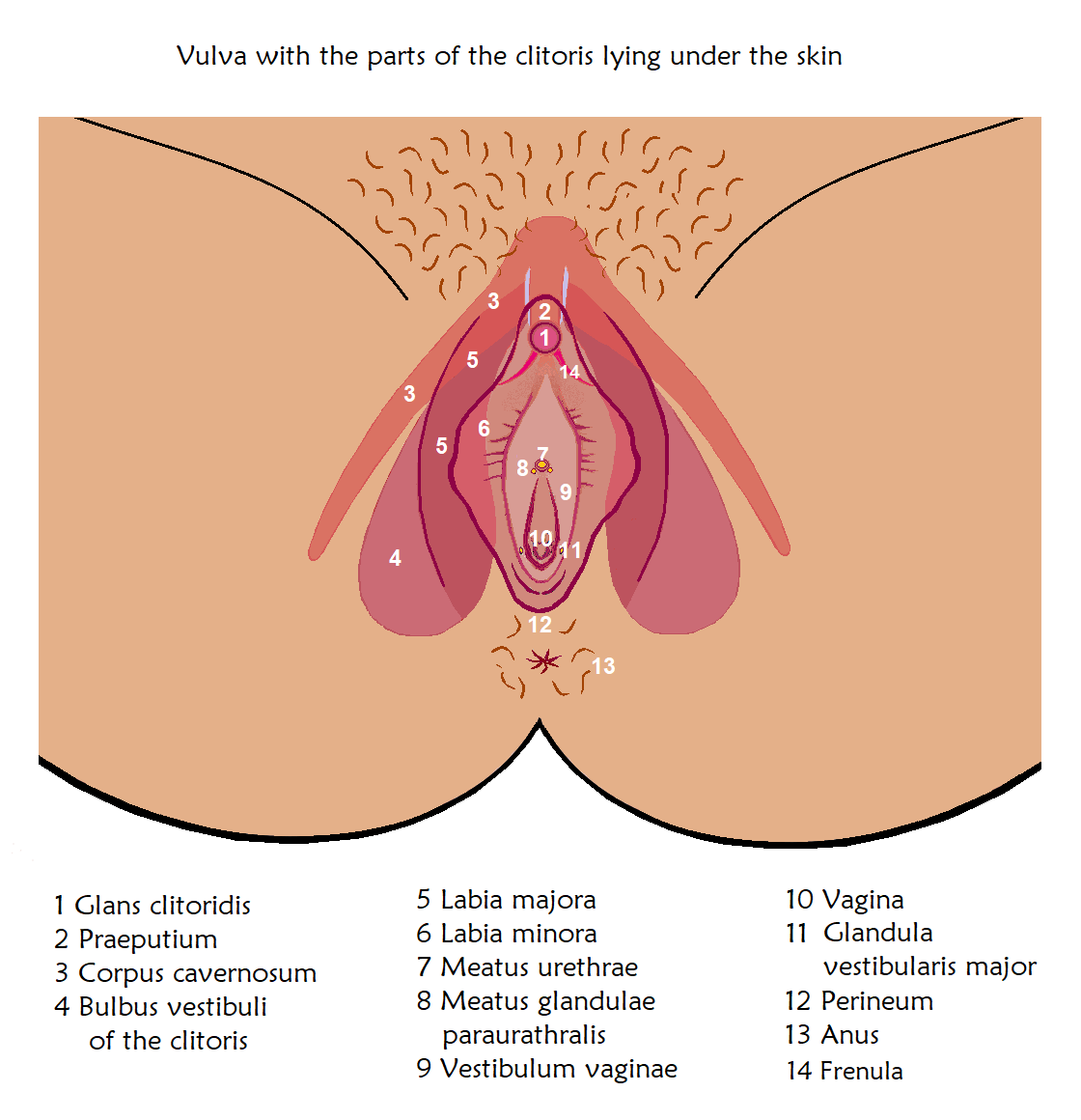
What most people picture as the clitoris, which is that small visible nub at the top of the vulva, is just the glans. The full structure is shaped more like a wishbone, extending internally along the pubic bone with two legs (called crura) that wrap around the vaginal opening, plus two vestibular bulbs that flank either side of the vaginal canal. Most of the clitoris is composed of internal parts.
When internal clitoral structures fill with blood during arousal, they create pressure around the vaginal walls, which is why many women experience more intense sensations during penetration when they're properly aroused first, and why external clitoral stimulation can produce sensations that feel deep and whole-body rather than localized.
Research indicates that clitoral tissue extends into the vaginal anterior wall, which also reframes the entire "vaginal vs. clitoral orgasm" debate. Most researchers now consider them the same event, just triggered from different angles.
How Many Nerve Fibers Are in the Clitoris?
The widely repeated figure of 8,000 nerve endings that came from a single line in a book from the 1970s, was never a formally published study, and was actually done on cows. It just got repeated so many times it became accepted as fact.
The real number is higher. A study found the actual count exceeds 10,000 nerve fibers, about 20% more than the bovine-derived estimate. The median nerve, which runs through the entire wrist and hand and is responsible for carpal tunnel syndrome, contains about 18,000 nerve fibers, less than double what's packed into the much smaller clitoris.
This density is why clitoral stimulation responds so differently to pressure, speed, and directness. Too much too soon overwhelms those nerve fibers. A lighter touch, especially early in arousal, tends to be far more effective than going straight for intense pressure, which is also why vibration (which distributes sensation across a wider surface area) works so well for many people.
The Myth of the “Immature” Clitoral Orgasm

In the early 20th century, Sigmund Freud proposed that clitoral orgasms were a sign of psychosexual immaturity, something women were supposed to "grow out of" as they transitioned to vaginal orgasms, which he considered the properly adult, feminine kind. It was, to put it plainly, made up. Freud had no anatomical evidence for this.
The theory got embedded in medical literature anyway, and the clitoral/vaginal orgasm hierarchy quietly persisted for decades, shaping how women understood (and judged) their own bodies long after the science had moved on.
What Modern Research Actually Shows
A study on women's experiences with genital touching found that only 18.4% of women report that intercourse alone is sufficient for orgasm, while 36.6% say clitoral stimulation is necessary during intercourse, and an additional 36% say that while it isn't strictly needed, orgasms feel better with it. Add those last two groups together and you're looking at nearly three quarters of women for whom clitoral stimulation either makes or meaningfully improves orgasm.
In the Hite Report, is is noted that when women pleasure themselves, almost 99% stimulate the clitoris.
The "vaginal vs. clitoral" debate also largely dissolves once you understand the anatomy. Because the clitoris extends internally along the vaginal walls, what feels like a vaginal orgasm often involves indirect clitoral stimulation anyway, just from a different angle. Research indicates that clitoral tissue extends into the vaginal anterior wall, which is why some researchers now argue the distinction between orgasm types is more about stimulation route than about two genuinely separate phenomena.
The Orgasm Gap
The orgasm gap is the consistent finding that heterosexual women orgasm significantly less often than their male partners during sex. Research shows fewer than 30% of women reach orgasm during mixed-sex sexual activity, while over 90% of men do.
Lesbian women report usually or always orgasming during sex at a rate of 86%, compared to 65% of heterosexual women. In every context where women orgasm more frequently, one key difference shows up, which is more attention paid to the clitoris.
A survey foundthat 78% of women's orgasm problems in heterosexual sex come down to not enough, or not the right kind, of clitoral stimulation.
9 Clitoral Stimulation Techniques for More Sexual Pleasure
1. Gentle Direct Stimulation of the Glans
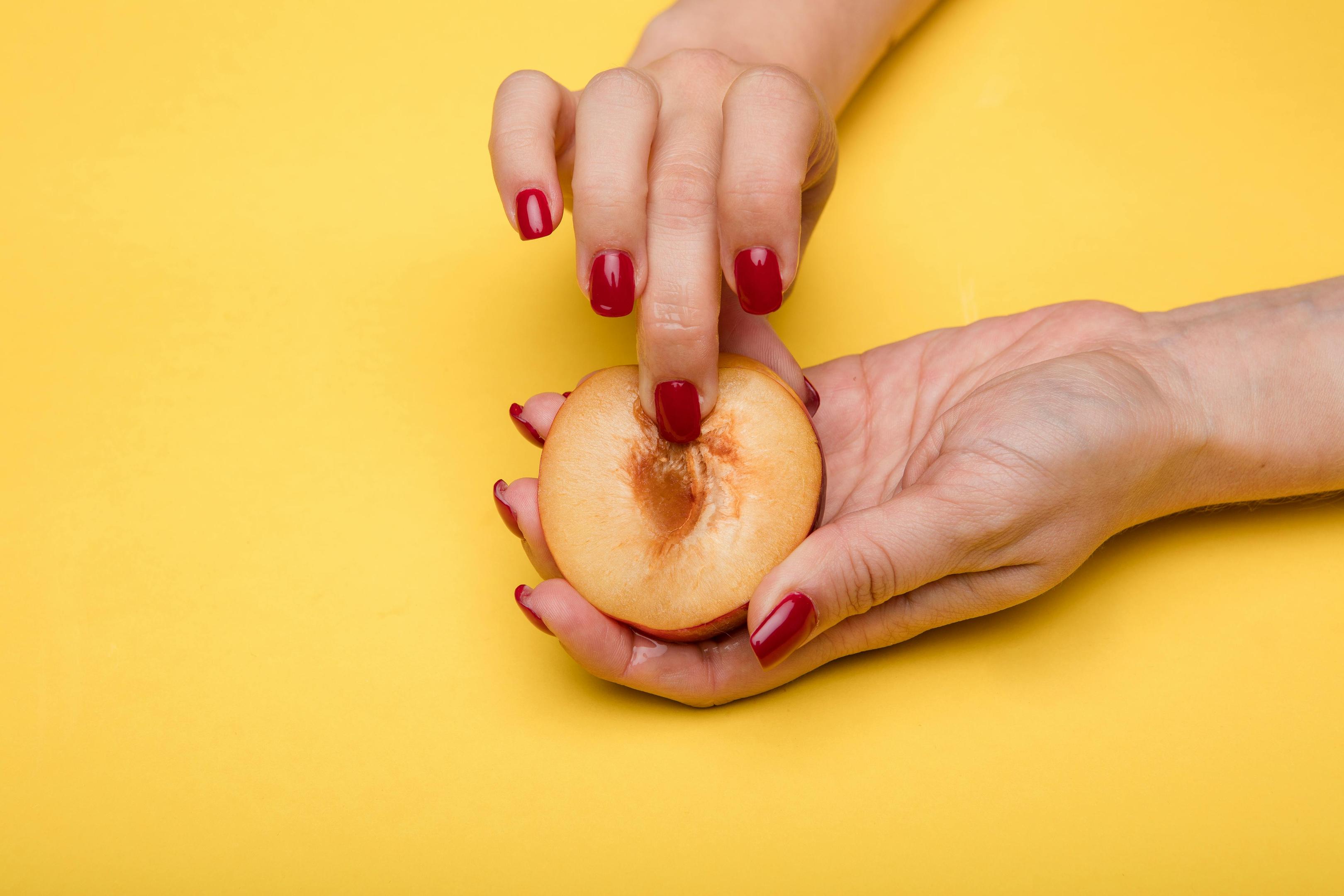
The glans clitoris is the most nerve-dense structure in the human body relative to its size, with over 10,000 nerve fibers concentrated into something roughly the size of a pea. It is the primary target for female orgasm. Two thirds of women prefer direct clitoral stimulation, with most also enjoying stimulation just around the clitoris, rather than on the glans alone.
The glans has no natural lubrication of its own, and dry friction on that concentration of nerve fibers is uncomfortable rather than pleasurable. A small amount of water-based lubricant on one or two fingertips changes the quality of sensation completely.
Then start lighter than you think you need to. This is where most people go wrong. The instinct is to apply meaningful pressure immediately, but the glans at rest is not the same as the glans during arousal. As sexual arousal builds, the erectile tissue of the clitoral body fills with blood, the glans becomes engorged and slightly more exposed from beneath the hood, and sensitivity increases significantly. Stimulation that feels adequate before arousal is established will feel genuinely intense once it is, which means starting too hard early on tends to produce discomfort rather than pleasure, and can cause the body to pull back rather than open up.
In terms of movement, three techniques are worth exploring individually before combining them:
-
Tapping: Light, rhythmic taps directly on or just around the glans produces short bursts of sensation that stimulate the mechanoreceptors differently to sustained pressure. Many women find tapping builds arousal faster than stroking, particularly early in a session.
-
Slow circles: One or two fingertips tracing small circles directly over the glans, or slightly wider circles that include the hood and surrounding tissue engage different nerve endings on each pass, which prevents the kind of localised desensitisation that can happen when the same spot receives identical stimulation repeatedly.
-
Up-and-down strokes: Nearly 64% of women cite this as their preferred stimulation style making it the single most commonly preferred technique in research. Stroke vertically along the glans and shaft with light to medium pressure, keeping the rhythm steady and unhurried.
The goal in this early stage is not orgasm, it's engorgement. The more blood that fills the internal clitoral structures before direct stimulation intensifies, the stronger the eventual response. Think of it as warming an engine rather than flooring the accelerator from a cold start.
2. Stimulating Through the Clitoral Hood
For a lot of women, direct contact with the glans is too intense to start with, particularly before arousal is well established. The clitoral hood protects the glans and provides a natural buffer that softens sensation and distributes pressure more evenly.
Stimulation through the hood tends to feel less sharp and more diffuse, which makes it easier to sustain for longer without tipping into overstimulation. Try applying gentle pressure through the hood in slow circles or a rhythmic press-and-release, and notice whether it builds arousal more gradually and consistently than going straight for direct contact. Research has confirmed that the mechanoreceptors in the clitoral glans are specifically tuned to light touch and mechanical vibration, which is part of why indirect, softer stimulation through the hood can be just as effective as direct contact, sometimes more so.
Read: Internal and External Orgasm: A Full-Body Pleasure Guide
3. Pubic Bone Pressure Technique
This is one of the most underrated techniques for partnered sex. During penetration, grinding the pubic mound against a partner's pubic bone creates direct pressure and friction on the external clitoral structures without requiring anyone to free up a hand.
The coital alignment technique (CAT) is when the penetrating partner shifts their body slightly higher than usual so their pubic bone aligns with the receiving partner's clitoris, then both partners move in a rocking rather than thrusting motion. Women often reach orgasm during intercourse by either rubbing the clitoris on a partner's body or by creating space around the clitoris so they or their partner could stimulate it.
It also engages the internal clitoral structures simultaneously. As the vestibular bulbs and crura are stimulated from the inside during penetration, external pressure from grinding activates the glans and shaft from the outside, both at the same time.
4. Oral Sex Techniques

Oral sex is one of the most reliable ways for women to reach orgasm. Research from the University of Florida found that receiving oral sex is directly associated with higher orgasm rates, and that it happens more frequently in relationship sex than in casual hookups.
The tongue has a specific advantage over fingers, where it is soft, warm, and self-lubricating, which means friction is never an issue. It's also capable of extremely subtle pressure variations that are genuinely difficult to replicate manually, all of which the 10,000-plus nerve fibers in the glans clitoris are exquisitely wired to detect.
But a wandering tongue doesn't always work. A tongue that covers a lot of ground, moves unpredictably, or switches technique every thirty seconds tends to feel more ticklish and disorienting than pleasurable. What actually works for most women is focused, consistent contact on the clitoris with enough pressure to feel it clearly, and a rhythm that stays steady long enough to actually build somewhere.
Gentle suction added to that focused contact draws blood into the erectile tissue and increases sensitivity noticeably, which brings a different quality of sensation to tongue movement alone.
5. Clitoral Stimulation with a Crystal Wand (Bulbous End)
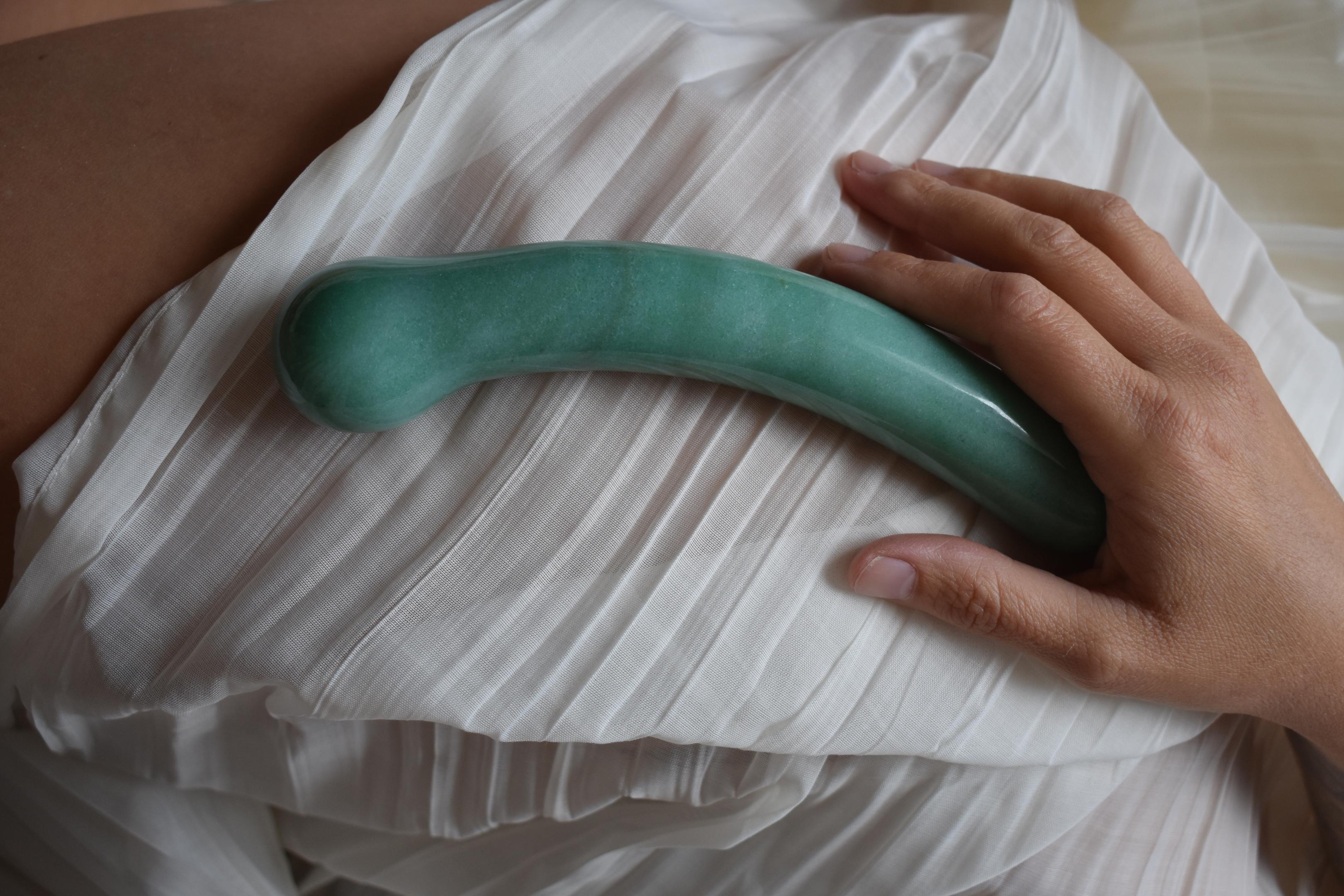
Amrita Wand® | Indian Jade Massage Wand
Vibrators get most of the attention, but there's a strong case for why a crystal wand, specifically the bulbous end of a wand, produces a quality of clitoral stimulation that battery-powered toys simply can't replicate.
Vibrators do the work for you. That's their appeal, but it's also their limitation. Constant mechanical stimulation at a fixed intensity means your nervous system is receiving the same input on repeat, which is exactly the condition that leads to desensitisation. Crystal doesn't vibrate and it responds entirely to how you move it, which means the stimulation is as varied, as slow, or as focused as you choose to make it. That puts you in a level of control that no vibrator setting can match.
The bulbous end specifically works well for external clitoral stimulation because the rounded surface distributes pressure across the full external clitoral region rather than concentrating it on one point. A fingertip is precise but small; but the bulbous end covers the whole area at once, which feels less sharp and more enveloping. Slow circular movements over the glans and hood, or gentle rocking pressure against the pubic mound, build arousal in a way that's hard to rush, which turns out to be exactly the point.
The largest study ever conducted on women's sexual pleasure found that spending time building up arousal is one of the most consistently cited factors in both reaching orgasm and in its intensity. A crystal wand doesn't let you skip that phase. The absence of vibration means you're working with your body's natural arousal timeline rather than trying to override it with mechanical intensity, and that slower build tends to produce noticeably stronger results.
Read: 10 Must-Have Luxury Sex Toys for Deep, Satisfying Pleasure
6. External + Internal Blended Stimulation
Blended stimulation, which is external clitoral stimulation combined with internal G-spot stimulation simultaneously, produces what many women describe as a qualitatively different orgasm to either alone. Women who have experienced both report that simultaneous clitoral and vaginal stimulation leads to more intense orgasms that feel harder to differentiate from each other which are more whole-body, longer-lasting, and in some cases associated with squirting, or otherwise known as Amrita orgasm.
The G-spot sits on the anterior vaginal wall, directly behind the clitoris, meaning internal pressure in that area stimulates the internal clitoral structures from the inside while external stimulation activates the glans and shaft from the outside. Both pathways converge on the same nerve network.
A crystal wand with a curved end is particularly effective for this. The curve allows consistent pressure against the anterior wall without requiring awkward hand positioning, while the other hand or a partner attends to external stimulation. Start with external stimulation first to build arousal and engorgement before introducing internal pressure, as the G-spot is significantly more responsive once the vestibular bulbs have filled with blood.
7. Leg Pressure Technique
Pressing the thighs together, whether during solo stimulation, grinding against a surface, or with a partner's leg or hand between the thighs, creates indirect pressure across the entire external clitoris and pubic mound simultaneously.
Because this technique engages the internal and external clitoral structures together through broad compression rather than targeted touch, the sensation tends to feel more diffuse and whole-body than direct fingertip stimulation. The erectile tissue within the clitoral body and vestibular bulbs responds to this kind of sustained pressure in a way that builds sexual arousal steadily rather than spiking it. Many women find this particularly useful for building arousal from a low baseline, or for sustaining stimulation during partnered sex without requiring a free hand.
It's also worth noting that thigh pressure is one of the oldest instinctive self-stimulation methods, and many people discover it before they discover anything else, which suggests the body is pretty naturally drawn to it for good reason.
8. Slow Build-Up Stimulation
Consistent, uninterrupted stimulation is not always the fastest route to female orgasm. Counterintuitively, deliberately varying rhythm, pressure, and pace, including adding intentional pauses, often produces stronger results than maintaining constant contact.
The physiology behind this is engorgement. Each time stimulation builds and then eases off, the erectile tissue of the clitoral body retains blood, meaning arousal doesn't fully reset with each pause, it compounds. When stimulation resumes, the internal structures are already more engorged and sensitive than they were at the start of the previous cycle, which means the body reaches orgasm from a progressively higher baseline each time. Women consistently cite spending time building up arousal as one of the most important factors in both reaching orgasm and in orgasm intensity.
In practice this might mean trying thirty seconds of steady circular stimulation on the glans clitoris, followed by a shift to lighter touch on the surrounding area, followed by a pause, followed by a return to direct stimulation with slightly more pressure than before. Alternating between the external clitoris and vaginal stimulation during this process also keeps sexual response active without overstimulating any single area, and for many women, that combination is exactly what tips a good experience into a genuinely intense one.
9. Blended Stimulation: G-Spot Pressure + Clitoral Stimulation
Pressure against the G-spot stimulates the clitoral body and surrounding erectile tissue through the vaginal wall, which is why combining it with direct external clitoral stimulation activates the entire clitoral structure, internal and external, simultaneously.
Women who have experienced both clitoral and vaginal orgasms consistently report that simultaneous stimulation of both produces more intense, longer-lasting, whole-body experiences, and in some cases female ejaculation. The internal structures are already engorged and responsive from arousal, so G-spot pressure at that point lands very.
For solo stimulation, a curved crystal wand with a bulbous end is one of the most effective tools, as the curve maintains consistent pressure against the anterior vaginal wall without the hand cramping that comes with fingers alone, while leaving the other hand free for external clitoral stimulation. Use a come-hither motion or sustained firm pressure rather than in-and-out thrusting, which tends to miss the G-spot entirely. For partnered sex, positions that naturally angle penetration toward the front wall make simultaneous external stimulation significantly easier to maintain.
It is also important to build external clitoral stimulation first. The G-spot is much more responsive once the vestibular bulbs have filled with blood and the entire clitoris is engorged. Attempting G-spot stimulation before adequate arousal is established is one of the most common reasons women report that it "doesn't work" for them, as the tissue simply isn't ready yet. Spend time on the external clitoris first, and the internal response will follow.
Risks and Misconceptions Around Clitoral Stimulation Devices
The Problem with High-Intensity Vibrators
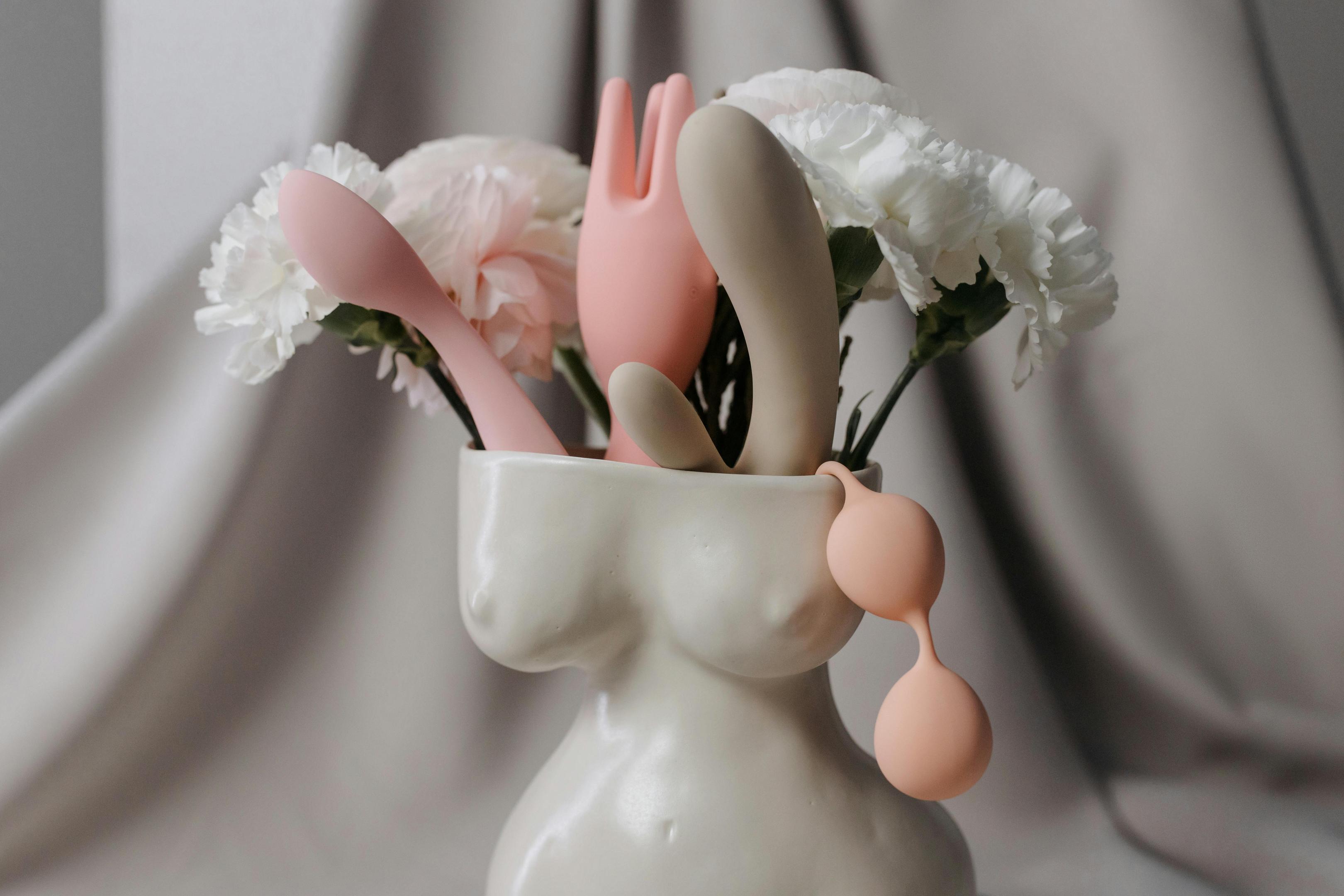
The glans clitoris has over 10,000 nerve fibers packed into a structure roughly the size of a pea. Expose those nerve fibers to intense, sustained vibration regularly and the nervous system does what it always does with repetitive input, it turns down the volume. The result is that lighter stimulation, including a partner's touch or tongue, starts to feel less effective. Many women who use high-intensity vibrators frequently report needing progressively more stimulation over time to reach orgasm.
The good news is it's reversible. Nerve desensitisation from vibrator use is temporary, and sensitivity typically returns within days of reducing intensity or frequency. Alternating between lower settings and higher ones, rather than defaulting to maximum every time, also helps prevent the threshold from creeping up in the first place.
The Risks of Clitoral Pumps
Clitoral pump suction draws blood into the erectile tissue of the external clitoris, increasing engorgement and temporarily heightening sensitivity. In theory, more blood flow means more sensation. In practice, the line between "heightened sensitivity" and "too much pressure on delicate tissue" is easier to cross than most product descriptions suggest.
Excessive or prolonged suction can cause bruising and irritation of the vaginal lips and surrounding genital area, which is tissue that has no protective layer of muscle or fat. It can also push sensitivity past the point of pleasure into active discomfort, which is the opposite of the intended outcome. Research specifically on clitoral pump safety is limited, which is itself a problem, given how widely they're sold.
Used briefly and gently, pumps can be a useful addition to sexual stimulation. Used aggressively or for extended periods, they're more likely to cause problems than solve them.
Air Suction Toys vs Traditional Stimulation
Air suction toys use pulses of pressurised air to stimulate the glans clitoris without direct physical contact, mimicking some of the sensory qualities of oral sex without a tongue actually being involved. The WAANDS™ Euphoria Vibrator uses this mechanism.
Because there's no direct friction on the nerve endings, these toys sidestep the desensitisation issue that comes with high-intensity vibrators. Air pulse stimulation engages the clitoral receptors without overwhelming them, which is why many women find it easier to sustain and more consistently effective than direct vibration.
That said, they don't work equally well for everyone. Women with a larger clitoral hood may find the airflow doesn't make sufficient contact with the glans to produce strong sensation. And the largest study ever conducted on women's sexual pleasure found that preferences for touch type, pressure, and location vary so substantially between individuals and that no single device or technique comes close to universal.
